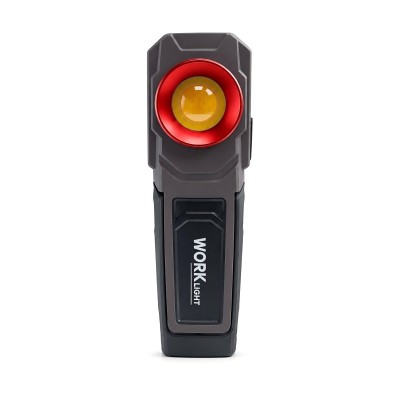
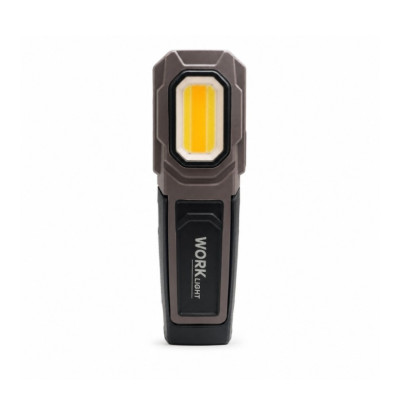
What is a Keychain Light and Why Do You Need One for EDC?
Have you ever found yourself needing a quick light source in an unexpected moment? Perhaps you've dropped your keys between the car seats, tried to find a keyhole in the dark, or navigated a sudden power outage. These are the moments where you realize the immense value of having a reliable light source immediately accessible. That's exactly why an essential piece of my everyday carry (EDC) is a compact and reliable keychain light. It's a small, often overlooked tool that punches well above its weight in practicality and preparedness.
Key Takeaways
- Definition and Core Function: A keychain light is an ultra-compact, portable flashlight designed to be attached to your keyring. Its primary purpose is to provide immediate, convenient illumination for a wide range of everyday tasks and minor emergencies, filling the gap when a larger flashlight is unavailable or impractical.
- Essential Features: When choosing a keychain light, key features to consider include brightness (lumens), battery type (rechargeable via USB-C or disposable AAA), durability and material (aluminum, titanium), water resistance (IP rating), and size/weight. Modern keychain lights often pack impressive brightness, with some models offering from 50 lumens for basic tasks to over 4,000 lumens in a turbo mode.
- Everyday Carry (EDC) Philosophy: A keychain light is a cornerstone of the EDC philosophy, which centers on being prepared for everyday challenges. Because it's attached to your keys, it's a tool you automatically carry everywhere, ensuring you're never caught without a light source. Its utility spans countless scenarios, from finding items in a dark bag to providing crucial light during a power failure or roadside emergency.
- Beyond Illumination: Many advanced keychain lights offer more than just a simple beam. Features like strobe modes can be used for signaling or as a non-lethal self-defense tool to disorient a potential threat. Some models include secondary lights like red LEDs to preserve night vision, UV lights for verifying currency, or high Color Rendering Index (CRI) LEDs for situations where seeing true-to-life color is critical.
- Practicality and Convenience: The keychain light's greatest strength is its unbeatable portability. Unlike the flashlight on your phone, which can be dim and drains a critical communication device's battery, a dedicated keychain light provides a much brighter, more focused beam without compromise. Many models are also surprisingly affordable, making them a cost-effective investment in your daily preparedness.
What Exactly is a Keychain Light?
At its core, a keychain light is precisely what the name suggests: a small, portable illumination device designed to be carried on a keyring alongside your keys. However, this simple definition barely scratches the surface of what these mighty-yet-miniature tools have become. They are the epitome of convenience meeting preparedness, amalgamating a flashlight and a keychain into one indispensable gadget. Gone are the days of fumbling in the dark; a keychain light puts a powerful beam right at your fingertips whenever you need it. These are not the bulky, unreliable flashlights of the past. Modern keychain lights are marvels of engineering, packing advanced LED technology, robust construction, and often rechargeable batteries into a housing that is barely larger than a tube of lip balm or your car key fob. They are designed to seamlessly integrate into your daily life, so unintrusive you'll forget it's there until the moment you need it most.
The Fundamental Features of a Keychain Light
When you begin to explore the world of keychain flashlights, you'll discover a surprising variety of features that separate a basic model from a high-performance tool. Understanding these fundamentals is key to choosing a light that perfectly suits your needs.
- Brightness (Lumens) and Beam: Lumens are the measure of total light output. While it might be tempting to go for the highest number, more isn't always better. For general tasks like finding a keyhole or looking inside a bag, 50 to 200 lumens is often more than sufficient. Some powerful models boast "turbo" modes that can reach incredible outputs, like the Nitecore T4K's 4,000 lumens, which is perfect for briefly illuminating a large area. Beyond brightness, consider the beam pattern; a wide "flood" beam is great for up-close tasks, while a focused "spot" or "throw" beam is better for seeing things at a distance.
- Battery and Charging: This is a crucial feature with two main paths. Many lights use common disposable batteries like a single AAA, which are readily available and easy to replace. However, the trend is shifting towards built-in rechargeable lithium-ion batteries. These are often charged via a built-in USB-C or Micro-USB port, sometimes cleverly hidden by unscrewing the body of the light, which also helps maintain water resistance. A rechargeable model is more sustainable and convenient, as you can top it up using the same cables you use for your other devices.
- Durability and Materials: A keychain light lives a tough life, constantly jostling with keys and facing accidental drops. Because of this, construction is paramount. Most quality lights are made from durable metals like aircraft-grade aluminum alloy or stainless steel, which offer excellent resistance to impacts and corrosion. For those seeking premium options, materials like titanium or copper are also available.
- Water and Impact Resistance: Since your light will be exposed to the elements, water resistance is a critical feature. This is measured by an IP (Ingress Protection) rating. For example, an IPX8 rating means the light can be submerged in water, while an IPX6 rating indicates it can withstand powerful water jets. This durability ensures your light won't fail you in the rain or if you accidentally drop it in a puddle.
- Size and Weight: The primary advantage of a keychain light is its "diminutive size." It must be small and light enough that you're willing to carry it every single day without it becoming a burden. Look for models that are compact and lightweight, ensuring they don't add unnecessary bulk to your keys.
Here is a comparison of common features you might find:
| Feature | Basic Models | Advanced Models |
|---|---|---|
| Material | Plastic | Aluminum, Titanium, Stainless Steel |
| Lumens | 10 - 50 lumens | 100 - 650+ lumens (with turbo modes up to 4000+) |
| Battery | Button Cells (e.g., LR41) | AAA or Rechargeable Li-ion (USB-C) |
| Modes | On/Off | Multiple levels, Strobe, SOS, Beacon, Red/UV light |
| Water Resistance | None / Splash-resistant | IPX6 - IPX8 Waterproof |
My Experience with the Practicality of a Keychain Light
The true value of a keychain light isn't something you can appreciate from a spec sheet; it's revealed through countless real-world moments. I can't count the number of times this small tool has saved me from frustration. There was the time I dropped an important screw while working on my computer under a dim desk—my keychain light made finding it a 10-second job instead of a 10-minute hunt. I’ve used it to navigate back to my campsite after dark, read a menu in a stylishly dim restaurant, and check my car's engine when a warning light came on at night.
These are the "unplanned situations" where a little bit of light makes a huge difference. Think of that dark, treacherous gap between your car seat and the center console, often called "the console black hole," where phones, coins, and fries seem to vanish forever. With a keychain light, you can easily peer into that abyss and retrieve your lost items. It’s about having a reliable tool for life’s small, unexpected challenges, from making sure you don't stumble on an unseen curb to simply being able to find the right key on your ring without scratching the door.

Beyond Illumination: Why a Keychain Light is More Than Just a Flashlight
While its main purpose is to create light, the functionality of many modern keychain lights extends far beyond simple illumination. They have evolved into multi-functional tools designed for safety, utility, and specialized tasks.
One of the most important secondary features is a strobe mode. Criminologists and self-defense experts agree that a powerful, disorienting strobe can be an effective tool to ward off a potential attacker, giving you precious seconds to escape. Having this feature on a tool you always carry provides a layer of personal security.
Furthermore, many advanced lights come with alternate light sources. For example:
- Red Light: This is excellent for preserving night vision. If you wake up in the middle of the night, a red light allows you to see without dazzling your eyes, making it ideal for campers, astronomers, and pilots.
- UV Light: An ultraviolet light can be used to spot hidden security features in currency and on IDs, check for fluid leaks, or even identify pet stains on a carpet.
- High-CRI Light: A high Color Rendering Index (CRI) light reveals colors more accurately, just as they would appear in natural daylight. This can be invaluable for photographers, electricians matching wires, or anyone who needs to see true-to-life colors.
Some lights even incorporate other tools, featuring bottle openers, magnetic bases for hands-free work, or rotatable handles that allow them to be propped up or attached to a tripod. These additions transform a simple flashlight into a versatile device ready for almost anything.
Why a Keychain Light Becomes Your Go-To EDC Tool
In the world of everyday carry, the goal is to assemble a set of essential items that prepare you for daily challenges without weighing you down. This is where the keychain flashlight truly shines, becoming a cornerstone of any well-thought-out EDC kit. Its primary benefit is that it's attached to your keys, which means you automatically take it with you everywhere. Unlike a larger flashlight you might leave in your car or at home, the keychain light is always there, ready for the unexpected. For anyone serious about being prepared, from outdoor enthusiasts to safety-conscious individuals, this tiny gadget is a must-have. It provides peace of mind and functionality, seamlessly blending into your daily routine until the moment it becomes indispensable.
Instant Light for Everyday Challenges with Your Keychain Light
The sheer versatility of a keychain light is what makes it so valuable. Its practical applications in daily life are almost endless, providing an immediate solution to a host of common problems. While many people think their phone's built-in light is sufficient, a dedicated keychain flashlight is vastly superior. A phone flashlight typically produces a weak, broad beam of around 40-50 lumens, which is only useful for close-up tasks and quickly drains your device's battery. In contrast, even an inexpensive keychain light can be 7.5 times brighter, offering a more focused and powerful beam that can illuminate objects much further away without depleting your primary communication device.
Consider these everyday scenarios where a keychain light proves its worth:
- Navigating in the Dark: Whether you're walking to your car in a poorly lit garage, taking the dog out for a late-night walk, or crossing a dark driveway, a keychain light provides a clear and safe path.
- Finding Lost Items: It's the perfect tool for locating items dropped in a dark movie theater, under a car seat, or behind furniture.
- Household Tasks: Use it to read the fine print on a label in a dim pantry, check the fuse box during a power outage, or look for leaks under the sink.
- Emergencies: In any unexpected emergency, from a flat tire at night to a natural disaster, a reliable light source is one of the most critical tools you can have. It allows you to assess the situation, signal for help, and navigate safely.
Adding a Touch of Personal Style with Your Keychain Light
An EDC keychain light is more than just a utilitarian tool; it's also a statement of personal style and an expression of your preparedness mindset. The market offers a vast array of designs, materials, and colors, allowing you to choose a light that matches your aesthetic. Manufacturers often release limited color runs and special editions, transforming these functional items into collectibles.
You can find lights to suit any taste:
- Sleek and Minimalist: Polished aluminum or titanium lights with clean lines for a modern look.
- Rugged and Tactical: Models with aggressive knurling for better grip and a matte black finish.
- Unique Materials: Some lights are crafted from copper or brass, which develop a unique patina over time, telling the story of their use.
- Customization: Many models are suitable for custom engraving, allowing you to add a personal touch or create a meaningful gift.
By choosing a keychain light that reflects your personality, you elevate it from a simple tool to a piece of gear you're proud to carry.
The Unbeatable Portability of an EDC Keychain Light
The single greatest advantage of a keychain flashlight is its portability. These devices are engineered to be incredibly compact and lightweight, often weighing less than an ounce and measuring just a few inches long. This ensures they can be attached to your keyring or slipped into a pocket without adding any noticeable bulk or weight.
The philosophy behind this is simple: the best tool is the one you have with you when you need it. A 2,000-lumen tactical flashlight is useless if it's sitting in a drawer at home during a power outage. Because a keychain light lives on your keyring, it becomes a natural part of your daily loadout. This constant accessibility is what makes it so much more practical than larger flashlights or even your phone's light for quick, unexpected tasks. Its design prioritizes convenience and readiness, making it the perfect backup light you can always count on to be there. Many models also include features like a lockout function, which prevents the light from accidentally turning on in your pocket and draining the battery. This focus on real-world usability solidifies its place as an essential EDC item.
Frequently Asked Questions (FAQs)
As you consider adding a keychain light to your EDC, some common questions often arise. Here are detailed answers to help you make an informed decision.
1. How many lumens do I really need?
The ideal lumen count depends entirely on your intended use.
- 10-50 Lumens: This range is sufficient for very basic tasks like lighting up a keyhole, finding something in a purse, or reading a map up close. A light in this category, like the Nitecore Tube, is ultra-compact and provides long runtimes on its lower settings.
- 50-200 Lumens: This is the sweet spot for general-purpose everyday carry. A light in this range, such as one offering 180 lumens, is bright enough for navigating a dark path, looking under furniture, or inspecting something across a room without being overpowering.
- 300-650+ Lumens: This level of brightness is excellent for outdoor use, such as walking a dog at night, camping, or illuminating a larger area during a power outage. Models in this category, like the RovyVon Aurora A3 with 650 lumens, offer serious performance.
- 1000+ Lumens (Turbo Mode): Some high-end keychain lights, like the Nitecore T4K, offer a short "turbo" burst of 1,000 lumens or more. This is not for sustained use due to heat and battery drain but is incredibly useful for momentarily lighting up a large area to assess your surroundings. Keep in mind that a 1000+ lumen light will almost always step down to a lower output very quickly to manage heat.
2. Isn't my phone's flashlight good enough?
While convenient, your phone's flashlight is not a suitable replacement for a dedicated keychain light for several reasons. The average smartphone light produces only about 40-50 lumens, which is significantly weaker than even a basic keychain model. Furthermore, a phone's light is a wide, unfocused beam designed as a camera flash, making it ineffective for seeing anything more than a few feet away. Using your phone's light also rapidly drains its battery, which is a critical resource in an emergency. A dedicated keychain light offers a brighter, more focused beam and preserves your phone's power for communication.
3. Are keychain flashlights waterproof and durable?
Yes, high-quality keychain flashlights are built to withstand the rigors of daily life. Durability often comes from materials like anodized aluminum, stainless steel, or titanium. Look for an IP (Ingress Protection) rating to determine water and dust resistance.
- IP54: Splash-proof, making it resistant to light rain from any direction.
- IP66: Weatherproof, protected against powerful jets of water.
- IPX8: Waterproof, meaning it can be fully submerged in water (typically up to 2 meters) without damage. Anodized aluminum bodies also provide significant impact and corrosion resistance. Quality models are designed to handle being dropped, jostled with keys, and exposed to the elements.
4. How long does the battery last, and should I get rechargeable or disposable?
Battery life varies greatly depending on the model, battery type, and brightness setting used. A light on its lowest "moonlight" setting (e.g., 0.5 lumens) can run for days, while the highest "turbo" mode may only last for a minute or two before stepping down. On a typical medium setting, most lights offer 1 to 10 hours of continuous runtime.
- Rechargeable: Most modern keychain lights feature built-in lithium-ion batteries that are rechargeable via a USB-C or Micro-USB port. This is convenient and cost-effective for daily use. A full charge typically takes between 60 to 100 minutes.
- Disposable (AAA): Some models still use standard AAA batteries. The advantage is that these batteries are available everywhere, making it easy to swap in a fresh one during travel or an extended power outage when you can't recharge. However, be cautious with alkaline batteries as they are prone to leaking and can damage your flashlight.
5. Can a keychain flashlight be used for self-defense?
Yes, a keychain flashlight can be a valuable, non-lethal self-defense tool. Its primary defensive use is to disorient a potential attacker by shining a bright, high-lumen beam directly into their eyes. Many lights also feature a strobe mode specifically designed for this purpose, which can cause confusion and give you time to escape. Using light to create distance and disengage is a legally defensible action. While some smaller, durable metal flashlights could theoretically be used as a striking instrument similar to a kubotan, this requires training and changes the legal nature of the tool from defensive to offensive in some jurisdictions. The main goal is always awareness and escape.
Conclusion
For me, a keychain light is far more than just another gadget on my keyring. It represents a small but powerful commitment to preparedness, blending convenience with a tangible sense of security. In a world full of small, unexpected challenges—from the mundane task of finding a dropped item in a dark car to the serious need for light in an emergency—this is one tool I know I will always have with me. It’s a practical, reliable, and surprisingly capable device that has proven its worth time and time again.
I believe investing in a good quality keychain light is a smart and accessible way to enhance your everyday readiness and showcase a bit of your unique style. It’s an incredibly simple step to take towards being more prepared for whatever the day (or night) might throw at you. I encourage you to consider adding one to your own carry—you might be surprised how often you reach for it.
What are your thoughts? Do you carry a keychain light, and if so, which one? Share your experiences and favorite models in the comments below