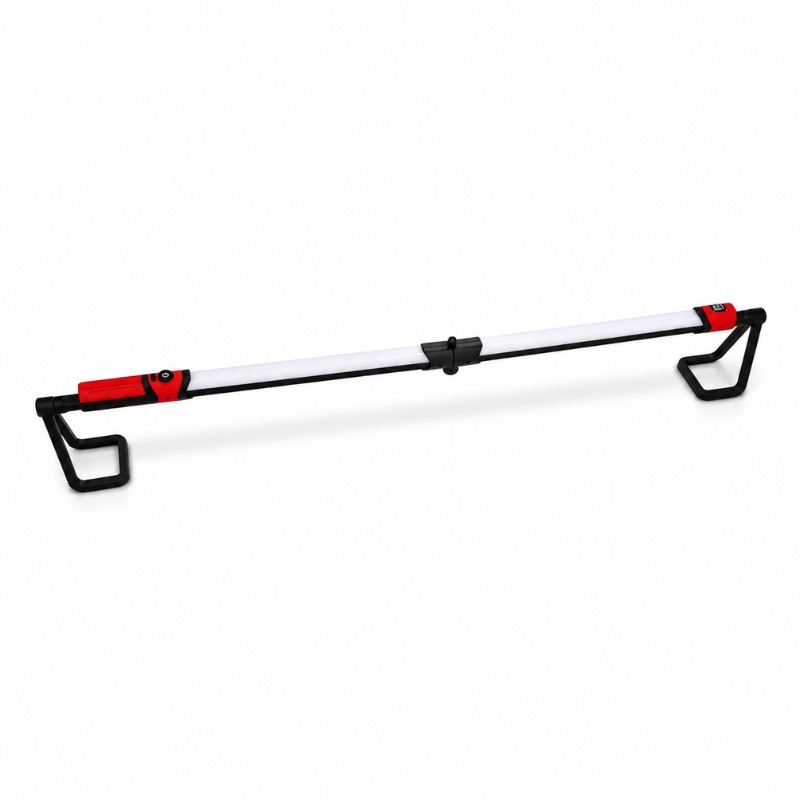
OEM vs ODM Work Lights: How Brand Owners Choose the Right Manufacturing Model
As brand owners navigating the work light market, deciding between Original Equipment Manufacturing (OEM) and Original Design Manufacturing (ODM) is a crucial strategic step. OEM offers the advantage of unique designs and full customization, albeit with higher costs and longer timelines, while ODM provides faster, more cost-effective market entry by leveraging existing designs. This fundamental choice between oem vs odm work lights impacts your product's distinctiveness, speed-to-market, and overall brand trajectory, including critical aspects like design ownership, tooling, certification, and after-sales support. Making the right decision from the start illuminates the path forward, preventing costly missteps and aligning your production strategy with your core business goals.
Key Takeaways
This guide provides a comprehensive analysis of the OEM and ODM manufacturing models to help work light brand owners make an informed decision. Here are the essential points to consider:
- At a Glance: OEM vs. ODM: The primary difference lies in who owns and develops the product design. In an OEM (Original Equipment Manufacturer) model, you, the brand owner, provide the complete design and specifications, and the manufacturer builds it for you. In an ODM (Original Design Manufacturer) model, the manufacturer already has pre-designed products that you can choose from, rebrand, and sell as your own, often with minor modifications.
- Control and Customization: OEM provides maximum control over every aspect of the work light, from internal components and material selection to aesthetics and functionality. This is ideal for brands aiming for a unique, highly differentiated product. ODM offers limited customization, usually restricted to colors, branding (logo and packaging), and some pre-approved component swaps. You are essentially adapting an existing product, not creating a new one.
- Cost and Investment: OEM involves significant upfront investment in research and development (R&D), prototyping, engineering, and tooling (molds and dies). While the initial costs are high, the per-unit cost can become competitive at a large scale. ODM has very low or no R&D and tooling costs because the manufacturer has already absorbed them. This makes it a much more budget-friendly option for entering the market.
- Speed-to-Market: ODM is significantly faster. Since you are using a market-ready design, production can begin almost immediately, allowing you to launch a product in weeks or a few months. OEM is a much slower process, often taking many months or even over a year, due to the lengthy design, prototyping, testing, and tooling phases.
- Intellectual Property (IP) and Exclusivity: This is a critical distinction. With OEM, you own the intellectual property of your design, giving you a unique, defensible product that no one else can sell. In an ODM arrangement, the manufacturer typically retains ownership of the core design and IP. This means they can, and often do, sell the same or a very similar base product to your competitors, leading to a crowded market with little product differentiation.
- Choosing the Right Model: The decision depends on your strategic priorities.
- Choose OEM if: You have a unique product vision, sufficient capital for investment, a long-term brand strategy focused on differentiation, and the technical expertise to manage the design process.
- Choose ODM if: Your priority is speed-to-market, you have a limited budget, you are testing a new market, or the product category doesn't require deep innovation (e.g., standard inspection lights).
- Associated Models: The terms private label work light and custom work light fit within this framework. Private labeling is almost always a form of ODM where a brand places its name on a generic product. A custom work light is the direct result of an OEM process, built entirely to the brand's specifications.
By carefully evaluating these trade-offs—control vs. speed, cost vs. uniqueness, and IP ownership vs. convenience—you can select the manufacturing model that best aligns with your brand's resources and market ambitions.
OEM vs ODM Work Lights: What Brand Owners Gain and Give Up
For brand owners, the choice between Original Equipment Manufacturing (OEM) and Original Design Manufacturing (ODM) is not merely a procurement decision; it's a strategic fork in the road that defines your product's identity, market position, and long-term potential. The core difference boils down to one critical question: who is responsible for the product's design? In an oem vs odm work lights scenario, this choice impacts everything from initial cost and speed to the very uniqueness of your brand.
With OEM, the brand owner provides a complete design or detailed specifications, and the manufacturer's role is to execute that vision precisely. You retain full control and ownership of the intellectual property. In contrast, an ODM partner has already designed and engineered products. a brand owner selects a product from the ODM's catalog and applies their own branding, making only minor cosmetic changes. This fundamental split creates a distinct set of gains and sacrifices for each path.
To better visualize these trade-offs, consider this direct comparison:
| Factor | Original Equipment Manufacturer (OEM) | Original Design Manufacturer (ODM) |
|---|---|---|
| Design Ownership | The brand owner (you) owns the design and intellectual property (IP). | The manufacturer owns the core design and IP. |
| Customization Level | High. You control every detail, from internal components to aesthetics. | Low to moderate. Usually limited to color, branding, and packaging. |
| Upfront Investment | High. Significant costs for R&D, engineering, and tooling. | Low to none. The manufacturer has already covered these costs. |
| Speed-to-Market | Slower. The development process can take months or even years. | Faster. You can launch a product very quickly by using an existing design. |
| Product Uniqueness | High. Your product is exclusive to your brand. | Low. Competitors can (and likely will) sell the same base product. |
| Risk Profile | Higher financial risk upfront due to R&D costs, with no guarantee of market success. | Lower financial risk, but higher market risk due to lack of differentiation. |
| Ideal For | Established brands with a unique vision and capital. | Startups, market testing, or brands prioritizing speed and low initial cost. |
Choosing OEM means you gain exclusivity and full control, which is a powerful competitive advantage. You are building a unique asset for your brand. The trade-off is a significant investment of time and money. Conversely, ODM allows you to enter the market quickly and with minimal financial risk, but you sacrifice uniqueness and control. Understanding this core dynamic is the first step in aligning your manufacturing strategy with your brand's ultimate goals.
OEM Work Light Manufacturer Model: Control, Cost, and Speed
Choosing the Original Equipment Manufacturer (OEM) model is a deliberate decision to prioritize control, ensure quality, and build a unique brand identity. For a custom work light, this path allows a brand owner to dictate every element, from the specific LED chips and driver electronics to the housing materials and beam optics. An oem work light manufacturer effectively becomes an extension of your own company, translating your precise blueprints into a tangible product. Let's break down the three core pillars of the OEM model: control, cost, and speed.
Ultimate Control and IP Ownership
The single greatest advantage of the OEM model is the absolute control it grants you. Because you provide the design, you own the intellectual property (IP). Your product's design, functionality, and unique features belong entirely to your brand, which is a powerful defense against competitors. This control extends to:
- Design and Specifications: You dictate the exact performance metrics, materials, dimensions, and quality standards. The manufacturer builds to your spec sheet, ensuring the final product aligns perfectly with your brand's promise.
- Quality Assurance: You can enforce stringent quality control processes, maintaining uniformity and reliability across every unit produced. This direct oversight is crucial for building customer trust and brand loyalty.
- Brand Identity: Since you own the design, your product is inherently unique. This differentiation is vital in a crowded market, and it allows you to build a brand that stands for specific qualities and innovations.
This level of control is essential for companies aiming to create a category-defining product or those with a long-term strategy centered on proprietary technology.

The High Cost of Uniqueness
This level of control and customization comes at a price. The OEM path requires a significant upfront financial commitment. These costs are not just for manufacturing but for the entire development lifecycle:
- Research & Development (R&D): Developing a new product from the ground up requires substantial investment in market research, concept development, and engineering. This phase alone can cost anywhere from $10,000 to over $100,000, depending on complexity.
- Prototyping: Creating and iterating on prototypes is a crucial but expensive step. Each iteration can cost thousands of dollars, and multiple rounds are often necessary to perfect the design before mass production.
- Tooling: This is often the largest single capital expense. Creating the injection molds and dies necessary for production can cost from a few thousand to over $50,000. These costs are largely irreversible, making early design decisions critical.
While the initial investment is high, OEM can lead to lower per-unit costs at large production volumes, as you aren't paying a premium for a manufacturer's pre-existing design and R&D.
Speed: The Deliberate Pace of Innovation
Compared to ODM, the OEM model is inherently slower. The time-to-market is measured in months or even years, not weeks. Traditional product development cycles can take 12 to 24 months. This extended timeline is a result of the necessary stages:
- Concept and Design: Translating an idea into detailed, manufacturable plans.
- Engineering and Prototyping: Building and testing functional prototypes to validate the design. This can be slowed by international shipping and communication gaps if working with overseas partners.
- Tooling Creation: The fabrication of molds and production lines.
- Testing and Certification: Ensuring the product meets all required safety and performance standards.
- Mass Production: Scaling up from prototypes to full production runs.
While this process is long, it is also deliberate. It allows for rigorous testing, refinement, and ensures the final product demonstrates high custom work light reliability. For brands where innovation and quality are non-negotiable, this slower, more controlled pace is a strategic advantage, not a drawback. A vertically integrated manufacturer that combines design, engineering, and manufacturing under one roof can significantly shorten this timeline by eliminating communication bottlenecks.
ODM Work Light Factory Model: Faster Launch, Shared Tooling
The Original Design Manufacturer (ODM) model offers a compelling alternative to OEM, built on the principles of speed, efficiency, and lower initial investment. An odm work light factory acts as a one-stop-shop, providing brand owners with pre-designed, market-tested products ready for branding. This model is particularly advantageous for startups, businesses testing new markets, or any company that prioritizes getting a product to customers quickly. The core benefits stem from two key elements: a vastly accelerated launch timeline and the cost savings of shared tooling.
Faster Launch: From Catalog to Customer in Record Time
The most significant advantage of the ODM model is the dramatically reduced time-to-market. By leveraging a manufacturer's existing designs, you can bypass the long and complex R&D, engineering, and prototyping phases inherent to OEM. The ODM process is streamlined and efficient:
- Product Selection: You browse the factory's catalog of work lights and select a model that meets your basic requirements.
- Customization: You work with the ODM to apply minor modifications. Typically, this is limited to branding (logos, packaging), color schemes, and sometimes minor adjustments to features or accessories from a list of pre-approved options.
- Production: Since the design, engineering, and tooling are already complete, the factory can move directly to mass production.
This entire cycle can take as little as 2-4 months, compared to the 8-18 months or more required for a typical OEM project. This speed allows brands to capitalize on market trends quickly, respond to competitor moves, and start generating revenue much sooner. For businesses looking to enter a market swiftly, ODM is the most effective path.

Shared Tooling and Lower Investment
The ODM model is significantly more cost-effective upfront because the manufacturer has already absorbed the massive costs of development and tooling. The R&D, engineering, and mold creation expenses are amortized across all the different clients who buy that same base product. This means:
- No R&D Costs: You don't have to fund the expensive process of designing a product from scratch.
- No Tooling Costs: The molds and manufacturing lines are already in place, saving you a capital investment that can reach tens of thousands of dollars.
- Lower Minimum Order Quantities (MOQs): Because the ODM serves multiple clients with the same components, they can often offer lower MOQs, making the model more accessible for smaller brands or initial test runs.
This financial structure de-risks market entry. Instead of betting a large sum on an unproven custom design, you can launch a product with a much smaller initial investment. A brand can use this low-cost entry to validate market demand before committing to a larger, more expensive OEM project in the future.
However, there are critical trade-offs. The factory owns the intellectual property of the core design, meaning you have no exclusivity. A competitor could easily partner with the same odm work light factory and sell a virtually identical product under a different brand name. This lack of differentiation is the primary risk of the ODM model. Furthermore, if you decide to switch manufacturers, you cannot take the design with you and must start the product selection process over from scratch.
Private Label Work Light and Custom Work Light: Where They Fit
The concepts of private label work light and custom work light are not separate manufacturing models but rather outcomes of the OEM and ODM processes. Understanding where they fit is key to clarifying your sourcing strategy. These terms describe the end product and the level of brand ownership involved.
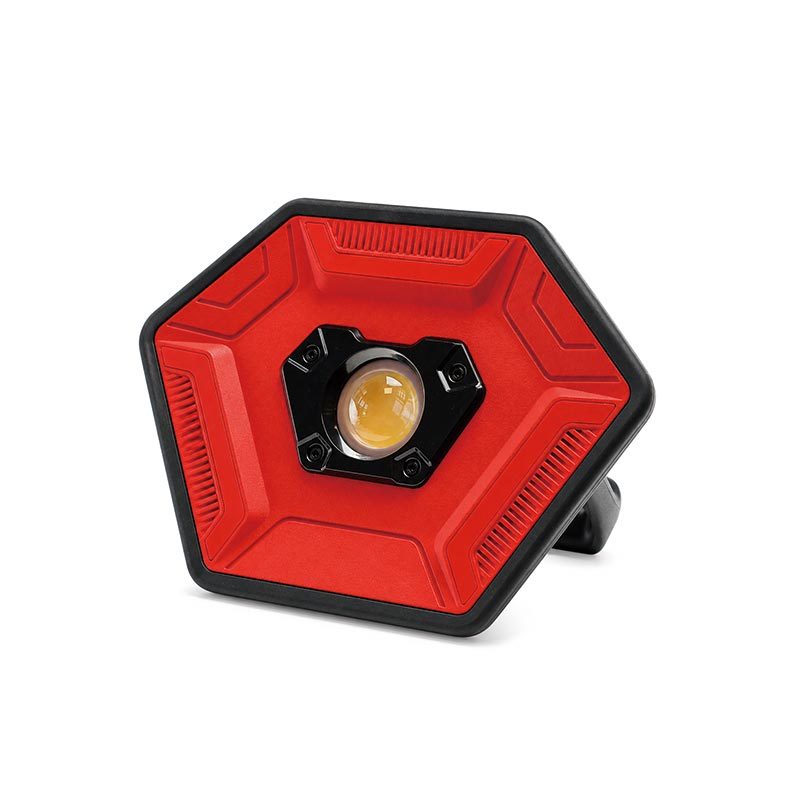
A custom work light is the ultimate goal of the Original Equipment Manufacturer (OEM) model. It is a product that has been designed and built from the ground up according to your brand's unique and exact specifications. Every aspect—from the internal circuitry and lumen output to the housing's ergonomic design and material composition—is an expression of your brand's vision. This path provides complete product differentiation and ensures you own the intellectual property, creating a strong competitive advantage. An example of a custom work light product example would be a floodlight with a proprietary lens array and a specific battery system designed exclusively for one brand. The work light oem odm journey for a fully custom product is intensive but results in a truly unique market offering.
A private label work light is a direct application of the Original Design Manufacturer (ODM) model. In this scenario, you select a ready-made work light from a factory's catalog and simply apply your own brand name and packaging. It is the fastest and most cost-effective way to launch a product, as all the design and engineering work has already been completed by the manufacturer. The product you are selling is not exclusive; other companies can buy the same generic work light from the same factory and sell it under their own private labels. Customization is minimal, usually limited to color and logo placement. This approach is ideal for testing market demand or quickly adding a standard product to your lineup without a large upfront investment.
In essence, the journey to a custom work light is through OEM, while private labeling is a strategy executed through an ODM partner.
Work Light OEM ODM Decision Matrix for First-Time Buyers
For a first-time buyer, choosing between OEM and ODM can feel daunting. The right choice depends on a careful assessment of your resources, market strategy, and long-term vision. To simplify this critical decision, you can use a decision matrix. This tool helps you weigh the most important factors and see which model better aligns with your business's unique needs.
Evaluate each factor below on a scale of 1 to 5, where 1 is "Not Important" and 5 is "Critically Important" to your business. Then, see which model—OEM or ODM—best serves the factors you rate highest.
| Decision Factor | OEM (Original Equipment Manufacturer) | ODM (Original Design Manufacturer) | Why It Matters for Your Choice |
|---|---|---|---|
| Budget & Financial Resources | Requires high upfront investment for R&D, tooling, and prototypes. | Low upfront investment as manufacturer covers R&D and tooling costs. | If your budget is limited, ODM is the safer, more accessible entry point. OEM is for those with sufficient capital to invest in creating a unique product. |
| Desired Speed-to-Market | Slow. Development, testing, and tooling create a much longer timeline before launch. | Fast. Leveraging existing designs allows you to get your product to market very quickly. | If capturing a current market trend or launching quickly is your top priority, ODM has a clear and significant advantage. |
| Product Uniqueness & Differentiation | High. You have full control over the design, creating a completely unique product that no competitor can copy. | Low. The core product design is owned by the factory and can be sold to your competitors under their own brands. | If your brand's core strategy relies on a unique design and proprietary features, OEM is the only path that guarantees true differentiation. |
| Intellectual Property (IP) Ownership | You own the product design, patents, and all related IP, giving you a defensible market position. | The manufacturer owns the IP of the base design. You only own your branding and any minor modifications you funded. | If long-term brand equity and protecting your innovations are critical, OEM is superior. With ODM, you are essentially licensing a design. |
| In-House Technical Expertise | Requires significant technical knowledge from your team to manage the design, engineering, and quality control processes. | Requires less technical involvement, as you are relying on the manufacturer's engineering and design expertise. | If you lack a dedicated product development or engineering team, ODM is a much simpler and more manageable route. |
| Long-Term Brand Strategy | Ideal for building a powerful brand with a portfolio of proprietary, innovative products. Supports higher margins in the long run. | Better for short-term goals like market testing, validating demand, or quickly expanding a product line without heavy investment. | If you envision your company as an innovator and market leader, the control and ownership offered by OEM align with that goal. ODM is more of a tactical choice for immediate market entry. |
| Scalability & Flexibility | Can be less flexible once tooling is created. Changes are costly and time-consuming. However, you can move your IP to other manufacturers. | You are dependent on the ODM. If the supplier relationship ends, you lose the product and must start over. | If you want full control over your supply chain and the ability to switch partners without losing your product, OEM provides greater long-term flexibility. |
How to Use This Matrix:
- Prioritize: Identify which factors are most critical for your business right now. Is it launching fast on a tight budget, or is it creating a one-of-a-kind product that will define your brand for years to come?
- Evaluate: For a startup with limited funds, the low cost and speed of ODM are often the deciding factors. An established brand looking to innovate and protect its market share will likely find the control and IP ownership of OEM to be non-negotiable.
- Decide: Choose the model that scores highest on your most important criteria. Many successful brands start with ODM to test the waters and graduate to OEM once they have proven market demand and secured more capital.
By an honest assessment of these trade-offs, even a first-time buyer can confidently choose the right manufacturing path.
How to Protect Your Design When Using an ODM Partner
Working with an Original Design Manufacturer (ODM) offers speed and cost savings, but it comes with a major risk: the manufacturer owns the core design's intellectual property (IP). This means they could potentially sell the same product to your competitors, turning your supplier into your competition. However, you can take several strategic and legal steps to protect your brand and the unique modifications you bring to an ODM product.
1. Use Strong Legal Agreements
The foundation of your protection is a clear, enforceable contract. Do not rely on verbal agreements or standard templates.
- Non-Disclosure, Non-Use, Non-Circumvention (NNN) Agreement: This is more powerful than a standard Non-Disclosure Agreement (NDA). An NNN agreement, drafted to be enforceable in the manufacturer's jurisdiction, prevents the factory from sharing your information (non-disclosure), using your designs or improvements for other clients or their own benefit (non-use), and bypassing you to sell directly to your customers or suppliers (non-circumvention). Sign this before sharing any sensitive information.
- Product Development and Manufacturing Agreement: This contract should explicitly define IP ownership. While the ODM owns the base design, this agreement should state that your brand owns the IP for all modifications, customizations, branding, and packaging you funded. It should also include an exclusivity clause, preventing the manufacturer from producing an identical or "substantially similar" product for anyone else, at least for a specific territory or time period.
2. Own Key Components and Tooling for Modifications
Even in an ODM model, you can assert control over the elements that make your product unique.
- Own the Molds for Your Customizations: If you pay for modifications that require new or altered tooling (e.g., a unique handle grip, a special battery compartment), ensure your contract specifies that you own these molds. This prevents the factory from using your specific custom parts for other clients.
- Control Critical Components: If your differentiation comes from a specific component (e.g., a proprietary LED chip or a unique lens), consider sourcing it yourself and providing it to the ODM for assembly. This makes it much harder for them to replicate your exact product.
3. Focus on Brand and Quality Differentiation
Since the core ODM product isn't exclusive, your brand becomes a primary differentiator.
- Register Your Trademarks: Protect your brand name, logos, and slogans by registering them in all relevant markets. This gives you legal recourse if another company tries to impersonate your brand.
- Invest in Quality Control: Implement a rigorous work light quality assurance program. By enforcing higher standards than other brands using the same base product, you can build a reputation for superior reliability and performance. Your brand can become known as the "premium version" of that particular work light design.

4. Build a Strong Relationship with a Reputable Partner
Finally, legal agreements are only as good as the partner who signs them.
- Vet Your Partner Thoroughly: Investigate a potential ODM's history, client reviews, and any past IP disputes. A trustworthy manufacturer will have clear policies for protecting client IP and be transparent about their processes.
- Don't Choose on Price Alone: An unusually low price may be a red flag. The factory might be cutting corners on quality or planning to subsidize their costs by selling your modified design to others.
By combining strong legal protections, strategic control over key components, and a focus on brand quality, you can mitigate the risks of the ODM model and protect the unique value you bring to the market.
Choose the Right Model with OWLAMP
Navigating the complexities of work light oem odm manufacturing can be challenging, but you don't have to do it alone. The right manufacturing partner doesn't just build your product; they provide the flexibility and expertise you need to succeed, regardless of which model you choose. At OWLAMP, we are structured to support your brand's vision, whether you require a fully custom work light or a fast-to-market private label solution.
For brands pursuing the OEM path, we act as your dedicated production arm. You bring the vision—the detailed specifications, the unique features, the ambitious performance targets—and our experienced engineering and manufacturing teams bring it to life. We specialize in turning complex designs into high-quality, reliable products. Our commitment to rigorous processes ensures that your final product not only meets but exceeds your exacting standards for custom work light reliability. We operate as a true oem work light manufacturer, respecting your intellectual property and focusing entirely on execution.
For brands that prioritize speed and efficiency through the ODM model, OWLAMP offers a curated selection of market-proven work light designs. You can leverage our existing platforms to launch your products quickly and cost-effectively. As a trusted odm work light factory, we offer meaningful customization options that go beyond a simple logo slap. We work with you to select finishes, features, and packaging that align with your brand identity. Our robust work light quality assurance protocols apply to all our products, ensuring that even our off-the-shelf solutions deliver the performance your customers expect.
The decision between OEM and ODM is a strategic one, and the best choice depends on your specific goals, budget, and timeline. With OWLAMP, you don't have to be locked into one rigid system. We offer the versatility to match your evolving business needs, providing a seamless work light oem odm experience. We can help you start with an ODM product to test the market and seamlessly transition to a fully custom OEM solution as your brand grows and your needs for differentiation increase.
Let us be the partner that illuminates your path to success. Explore our capabilities and see a custom work light product example that showcases our commitment to quality and innovation.
Frequently Asked Questions (FAQs)
Q1: What is the fundamental difference between OEM and ODM in the context of work lights?
The fundamental difference lies in who is responsible for the design and intellectual property (IP). In an OEM (Original Equipment Manufacturer) relationship, you (the brand owner) provide the complete design and specifications for a custom work light, and the manufacturer builds it for you. You own the IP. In an ODM (Original Design Manufacturer) relationship, the manufacturer offers a pre-designed work light from their catalog. You then brand it as your own, often with minor customizations. The manufacturer retains the IP of the core product design.
Q2: Which model is better for a startup company, OEM or ODM?
For most startups, the ODM model is the more strategic choice. It offers a significantly faster time-to-market and requires a much lower upfront investment because there are no R&D or tooling costs. This allows a startup to test a product idea, validate market demand, and generate revenue quickly without taking on substantial financial risk. The OEM path, with its high costs and long development timelines, is generally better suited for established brands with sufficient capital and a clear, long-term product strategy. Many brands successfully start with ODM and transition to OEM as they scale.
Q3: Who owns the tooling (molds and dies) in each model?
In a typical OEM arrangement, the brand owner pays for the custom tooling, and therefore owns it. This is a critical asset, as it gives you the flexibility to move production to a different manufacturer if needed. In an ODM arrangement, the manufacturer already owns the tooling, as it was created for their pre-existing product design. You are effectively paying for access to use their tooling, which is why your upfront costs are lower. If you pay for a custom modification to an ODM product that requires a new mold, you should ensure your contract specifies that you own that specific piece of tooling.
Q4: Can I customize an ODM work light?
Yes, but customization is typically limited. Standard ODM customizations for a private label work light include changing the color of the housing, applying your brand's logo and name, designing custom packaging, and sometimes bundling different pre-approved accessories. You generally cannot make significant changes to the product's core structure, electronics, or functionality, as that would require re-engineering and new tooling, effectively turning it into an OEM project.
Q5: How can I prevent an ODM factory from selling my product to competitors?
This is a primary risk of the ODM model. While you cannot stop the factory from selling their base design to others, you can protect your specific version and brand through several measures. The most important is a strong manufacturing agreement that includes an exclusivity clause. This clause can contractually prevent the factory from selling an identical or substantially similar product (including your unique modifications) to anyone else, either globally or within a defined sales territory. Additionally, using a strong NNN (Non-Disclosure, Non-Use, Non-Circumvention) agreement provides further legal protection.
Q6: Can our company switch from an ODM to an OEM model later?
Absolutely. This is a common and effective growth strategy. A brand can use the ODM model to enter a market quickly and validate that there is customer demand for a certain type of work light. Once sales are proven and the brand has more capital and a clearer understanding of what features customers want, it can invest in developing a fully custom work light via the OEM model. This allows for greater product differentiation and IP ownership, building a stronger long-term competitive advantage.
Ultimately, the choice between OEM and ODM for your work lights hinges on aligning our brand's unique vision, available resources, and strategic market goals. OEM provides maximum control and differentiation but demands greater investment and patience, while ODM offers a quicker, more affordable entry point, albeit with less exclusivity. By carefully weighing these factors, a brand owner can confidently select the manufacturing model that will best illuminate their path to success in the competitive work light industry. Take the time to evaluate what matters most to your brand—uniqueness, speed, or cost—and choose the partner and model that will empower your growth. We encourage you to share this article with your team and discuss how these models align with your strategic objectives.