IP and IK Ratings for Work Lights: What Buyers Must Verify
In the competitive landscape of tenders and platform audits, the scrutiny on work light protection and certification is growing. We've observed that many buyers struggle to decipher complex IP and IK codes, leaving them unsure of what exactly they're investing in. This uncertainty can lead to purchasing equipment that is unfit for the job, resulting in premature failure, safety hazards, and unexpected costs.
Let’s demystify this: ip and ik ratings for work lights are crucial indicators of dust and water ingress protection, and impact resistance, respectively. It’s essential to verify both by matching them directly to your specific application requirements to ensure safety and longevity. Understanding these codes is not just a technical formality; it's a fundamental step in making a sound investment in equipment that will perform reliably under pressure.
Key Takeaways
- IP Ratings (Ingress Protection): This two-digit code measures how well a work light is sealed against solids (like dust) and liquids (like water). The first digit (0-6) rates solid protection, and the second digit (0-9K) rates liquid protection. A higher number means greater protection.
- IK Ratings (Impact Protection): This code, from IK00 to IK10, measures a work light's resistance to mechanical impacts. An IK10 rating signifies the highest level of protection, capable of withstanding 20 joules of impact energy, which is critical for work light durability in harsh environments.
- IP65 vs. IP67: An IP65 rating means the light is dust-tight and protected against water jets, suitable for general outdoor and industrial use. An IP67 work light offers the same dust protection but can also be temporarily submerged in water (up to 1 meter for 30 minutes), making it ideal for environments with flooding risks or where submersion is possible.
- CE Certification: This is a mandatory mark for products sold in the EU, declaring conformity with health, safety, and environmental protection standards. Buyers should always request the Declaration of Conformity (DoC) and inquire about the underlying technical file, which contains essential test reports for a ce certification work light.
- Verification is Non-Negotiable: Never take ratings at face value. Always request and review full test reports from accredited third-party laboratories. A certificate is a summary, but the full report provides the verifiable proof of compliance and performance that ensures you're getting what you paid for.
IP and IK Ratings for Work Lights: What Each Number Means
When selecting a work light, the specifications sheet is filled with codes and numbers. Among the most important are the IP and IK ratings. These standardized codes are not marketing jargon; they are a universal language that defines a product's resilience to its environment. The International Electrotechnical Commission (IEC) establishes these standards to give users a clear and consistent way to judge the durability of electrical enclosures. Understanding what each digit means is the first step toward choosing a light that will survive the rigors of your worksite and provide a reliable return on investment.
Decoding IP Ratings for Work Lights: Protection Against Solids and Liquids
The Ingress Protection (IP) rating is a two-digit code established by the IEC 60529 standard. It classifies the degree of protection an electrical enclosure, like a work light, offers against the intrusion of foreign objects and moisture. The format is always "IP" followed by two numbers (e.g., IP67). The first digit deals with solids, and the second deals with liquids. A simple rule to remember is that a higher number generally signifies a higher level of protection.
The First Digit: Your Work Light's Defense Against Solids and Dust
The first digit of an IP rating work light ranges from 0 to 6 and indicates the level of protection against solid objects, from large body parts down to microscopic dust. This is crucial for preventing internal components from being damaged by particles that are common on construction sites, in workshops, or in agricultural settings.
Below is a breakdown of what each level means:
| First Digit | Protection Against Solid Objects | Example of Protection |
|---|---|---|
| IP0X | No protection. | No protection against contact or object ingress. |
| IP1X | Objects >50 mm | A human hand. |
| IP2X | Objects >12.5 mm | Fingers. |
| IP3X | Objects >2.5 mm | Tools, thick wires. |
| IP4X | Objects >1 mm | Most wires, screws, small insects. |
| IP5X | Dust Protected | Ingress of dust is not entirely prevented, but it must not enter in sufficient quantity to interfere with the satisfactory operation of the equipment. |
| IP6X | Dust Tight | No ingress of dust; complete protection against contact. |
For most professional work lights, a first digit of 5 or 6 is essential. A rating of IP6X ensures that the sensitive electronics inside are completely sealed from harmful dust, which can cause short circuits, overheating, and eventual failure.

The Second Digit: How Your Work Light Withstands Water Ingress
The second digit of the IP rating, ranging from 0 to 9K, describes the enclosure's effectiveness against the ingress of liquids, primarily water. This is a critical factor for any work light used outdoors, in damp environments, or in areas that require frequent cleaning with water.
Here's how to interpret the second digit:
| Second Digit | Protection Against Liquids | Details of Test |
|---|---|---|
| IPX0 | No protection. | --- |
| IPX1 | Dripping water | Vertically falling drops shall have no harmful effect. |
| IPX2 | Dripping water when tilted | Protected against vertically falling drops with the enclosure tilted up to 15 degrees. |
| IPX3 | Spraying water | Water sprayed at any angle up to 60° from the vertical shall have no harmful effect. |
| IPX4 | Splashing water | Water splashing against the enclosure from any direction shall have no harmful effect. |
| IPX5 | Water jets | Water projected by a nozzle against the enclosure from any direction shall have no harmful effects. |
| IPX6 | Powerful water jets | Water projected in powerful jets shall not enter the enclosure in harmful quantities. |
| IPX7 | Temporary immersion | Ingress of water in a harmful quantity shall not be possible when the enclosure is immersed in water up to 1m for 30 minutes. |
| IPX8 | Continuous immersion | Suitable for continuous immersion in water under conditions specified by the manufacturer. |
| IPX9K | High-pressure, high-temperature water jets | Provides protection against close-range, high-pressure, high-temperature spray downs. |
Understanding IK Ratings for Work Lights: Measuring Impact Resistance
While the IP rating covers dust and water, the IK rating defines an enclosure's resistance to mechanical impact. Governed by the international standard IEC 62262, the IK rating is a critical measure of a work light's physical toughness. The rating scale runs from IK00 (no protection) to IK10 (highest protection). This rating is especially important in environments where equipment can be dropped, knocked over, or struck by tools and machinery.
The IK rating is measured in joules (J), a unit of energy. The test involves subjecting the light to a controlled impact, such as from a free-falling hammer, to see how much energy it can withstand without breaking or compromising its safety.
Here is a chart detailing the IK rating scale:
| IK Rating | Impact Energy (Joules) | Real-World Equivalent (Approximate) |
|---|---|---|
| IK00 | 0 | No protection. |
| IK05 | 0.7 J | Impact from a 0.2 kg mass dropped from 35 cm. |
| IK06 | 1 J | Impact from a 0.5 kg mass dropped from 20 cm. |
| IK07 | 2 J | Impact from a 0.5 kg mass dropped from 40 cm. |
| IK08 | 5 J | Impact from a 1.7 kg mass dropped from 30 cm. |
| IK09 | 10 J | Impact from a 5 kg mass dropped from 20 cm. |
| IK10 | 20 J | Impact from a 5 kg mass dropped from 40 cm. |
For demanding job sites, a rating of IK08 or higher is recommended to ensure the light can survive accidental drops and impacts, reflecting true work light durability.
IK10 Rating: Impact Protection for Industrial Work Lights
In environments where tools get dropped, machinery moves constantly, and accidents are a matter of when, not if, the physical robustness of a work light is paramount. This is where the ik10 rating becomes a non-negotiable feature. As the highest level of impact protection defined by the IEC 62262 standard, IK10 certifies that a device can endure significant mechanical shocks without failing.
What Does IK10 Mean for Your Work Light's Durability?
An IK10 rating signifies that a work light's enclosure has been tested to withstand an impact energy of 20 joules. To put that into perspective, this is equivalent to the impact of a 5 kg (11 lbs) object being dropped onto the light from a height of 40 cm (15.7 inches). This level of protection ensures that the housing can resist severe blows, accidental drops, and even acts of vandalism without cracking, deforming, or allowing the enclosure to be breached. When a work light has an IK10 rating, it means its internal components—the LEDs, drivers, and wiring—are shielded from shocks that would shatter lesser-quality products. This superior level of protection is a key component of overall work light durability manufacturing practices.
Verifying this is crucial, and buyers should have access to the full ik10 rating test reports to confirm that the product has passed the standardized testing protocols. While some manufacturers may claim ratings beyond IK10, these fall outside the official IEC standard and lack a formalized testing procedure. Therefore, IK10 remains the highest verifiable benchmark for impact resistance.
Scenarios Where IK10 Protection is Critical for Work Lights
Not every application requires the maximum level of impact protection, but for many professional and industrial settings, an IK10 rating is essential for safety, reliability, and long-term value.
Here are some scenarios where IK10 protection is critical:
- Construction and Demolition Sites: On these chaotic sites, work lights are frequently moved, set on unstable surfaces, and exposed to falling debris or accidental collisions with heavy equipment. An IK10-rated light can survive being knocked over or struck, preventing costly replacements and work delays.
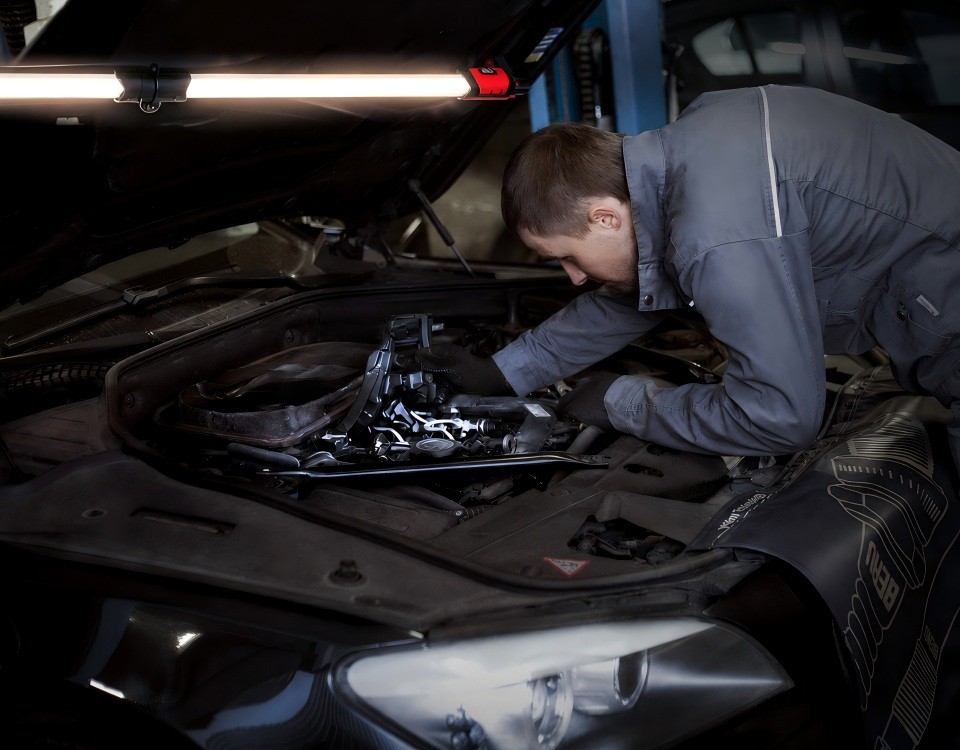
- Automotive and Repair Garages: Mechanics often work in tight spaces, and lights can easily be dropped, kicked, or run over. An IK10 work light ensures it can handle the rough treatment common in a busy workshop.
- Industrial and Manufacturing Plants: In factories and warehouses, impacts from forklifts, carts, and moving equipment are a daily risk. Lights with an IK10 rating ensure continued operation and enhanced safety in these challenging conditions.
- Public and High-Traffic Areas: For lighting used in public spaces, parking garages, or tunnels, the risk of vandalism is high. An IK10 rating provides vandal-resistant protection, ensuring the light remains functional and secure.
- Mining and Tunneling: These environments are notoriously harsh. Work lights are subject to being dropped, hit by tools, and exposed to vibrations. The robust protection of an IK10 rating is a fundamental requirement for equipment in these subterranean settings.
In essence, if a work light is going to be used anywhere but a fixed, protected location, specifying an IK10 rating is a wise investment in its longevity and reliability.
IP67 Work Light vs IP65: Which Ingress Protection Do You Need?
After ensuring a work light is tough enough to handle impacts, the next critical consideration is its protection against environmental elements like dust and water. Both IP65 and IP67 rated fixtures offer complete protection against dust (as indicated by the first digit '6'). The key difference lies in their level of water protection, which is defined by the second digit. Choosing between an IP65 and an IP67 work light depends entirely on the specific conditions of your work environment. Making the wrong choice can lead to equipment failure, while over-specifying can mean unnecessary costs.
IP65 Work Lights: Reliable Protection Against Dust and Water Jets
An IP65 rating signifies that a work light is completely dust-tight and protected against low-pressure water jets from any direction. This is the standard for most high-quality outdoor and industrial lighting, providing ample protection against common environmental hazards.
An IP65-rated work light is suitable for:
- General Outdoor Use: It can comfortably withstand heavy rain, snow, and wind-driven spray.
- Indoor Industrial Environments: It protects against airborne dust in workshops, factories, and warehouses and can be cleaned with a hose.
- Construction Sites: It is durable enough to handle dusty conditions and being rinsed off at the end of the day.
For the vast majority of applications, such as a light mounted on a wall or a tripod, an IP65 rating provides robust and sufficient protection.
IP67 Work Lights: Ensuring Submersible Protection for Demanding Environments
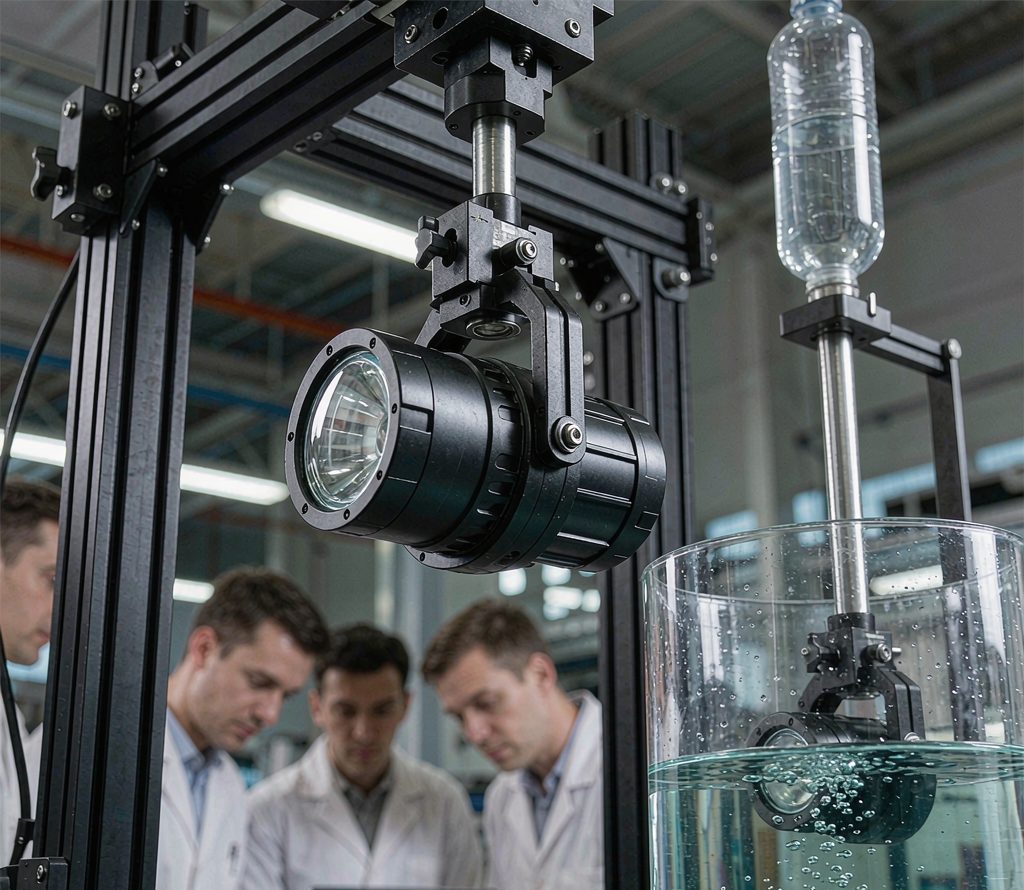
An IP67 work light offers a significant step up in liquid protection. In addition to being dust-tight, it is designed to withstand temporary immersion in water. The official standard specifies that an IP67-rated device must prevent water ingress when submerged in up to 1 meter of water for 30 minutes.
This level of protection is crucial in environments where submersion is a real possibility. It is a common misconception that IP67 is simply "better" than IP65; they are tested for different scenarios. An IP67 rating is specifically for immersion, while an IP65 rating is for water jets.
An IP67-rated work light is the right choice for:
- Marine and Coastal Environments: Essential for docks, boats, and areas exposed to splashing waves and high humidity.
- Flood-Prone Areas: Ideal for ground-level fixtures or in basements and sites where standing water could occur.
- Underground and Confined Spaces: Perfect for mining, tunneling, or utility work where lights might be dropped into puddles or exposed to flooding.
- Food Processing and Heavy Washdown Areas: In facilities requiring intensive cleaning with high volumes of water, the submersible protection of the broad ip67 work light range offers an extra margin of safety.
Choosing the Right IP Rating for Your Work Light: A Scenario Guide
To make the decision clearer, here is a comparative table to help you match the IP rating to your specific needs. Selecting the right ip rating work light is a crucial step for ensuring longevity.
| Scenario | Recommended IP Rating | Rationale |
|---|---|---|
| Mobile Mechanic's Workshop | IP65 | The light needs to resist dust, rain if working outdoors, and occasional splashes of fluids. It is unlikely to be submerged. |
| Building a Deck in the Backyard | IP65 | It will be exposed to dust from sawing and potentially rain. An IP65 light is perfectly adequate. |
| Shipyard Maintenance | IP67 | High humidity, salt spray, and the risk of being dropped into the water make IP67 protection essential. |
| Basement Renovation in a Flood-Risk Zone | IP67 | If there is any chance of the work area flooding, an IP67 light provides peace of mind that it will survive a temporary submersion. |
| Large-Scale Construction Site | IP65 / IP67 | IP65 is suitable for general area lighting on tripods or towers. IP67 is better for lights used in trenches, near excavation sites, or in any low-lying area where water can pool. |
| Car Wash Facility | IP66 or Higher (e.g., IP67) | IP65 protects against jets, but the powerful, high-pressure sprays in a car wash might require IP66. IP67 adds immersion protection as an extra safeguard. |

CE Certification Work Light: Documents Buyers Should Request
Beyond IP and IK ratings, one of the most important marks to look for on a work light is the CE logo. The CE mark is not a quality certification but a mandatory declaration by the manufacturer that the product meets all applicable EU health, safety, and environmental protection legislation. For a ce certification work light, this means it complies with key directives like the Low Voltage Directive (LVD), Electromagnetic Compatibility (EMC) Directive, and RoHS (Restriction of Hazardous Substances).
However, a CE logo on its own is legally meaningless without the proper documentation to back it up. Astute buyers and distributors must perform their due diligence by requesting and verifying these essential documents to ensure compliance and avoid liability.
Essential Technical Documents for a CE Certified Work Light
When a manufacturer affixes a CE mark, they are legally assuming responsibility for the product's conformity. This claim must be supported by a comprehensive set of documents, collectively known as the Technical File. While you may not need the entire file, you should always request the following:
EU Declaration of Conformity (DoC): This is the single most important legal document. It is a one-page statement signed by the manufacturer, formally declaring that the product complies with all relevant EU directives. A valid DoC must include:
- The manufacturer's name and full address.
- A unique model or product identification number that matches the product you are buying.
- A list of all applicable EU directives and the harmonized standards used to demonstrate compliance (e.g., EN 60598-1 for lighting safety).
- The signature of a responsible person within the company. If a supplier cannot produce a DoC for a specific product, it is a major red flag. Requesting the ce certification work light documents should be a standard part of your procurement process.
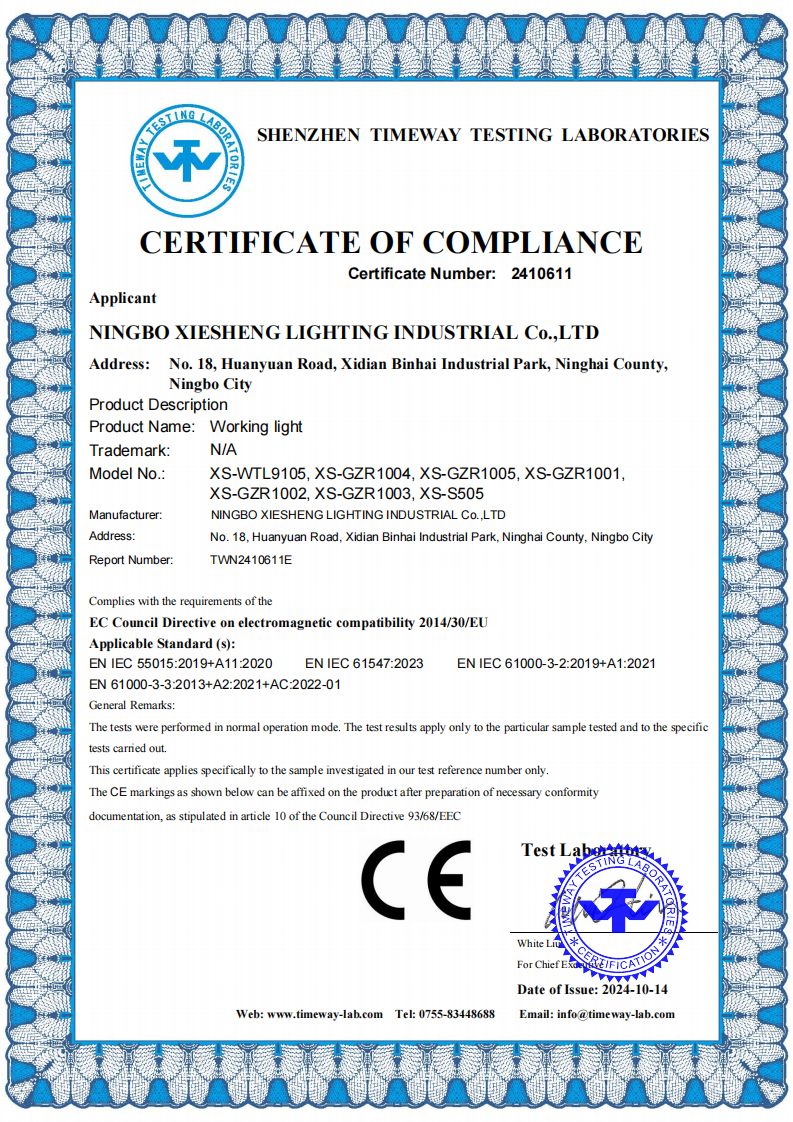
Test Reports from an Accredited Laboratory: The DoC is a declaration, but the test reports are the proof. These reports, issued by a third-party lab, provide the detailed results of conformity assessments for each directive (LVD, EMC, RoHS, etc.). You should verify that the product model on the test report matches the one you are purchasing and that the standards listed are current.
Work Light Durability Testing: Drop, Vibration, and Thermal Cycling
True work light durability goes beyond standardized IP and IK tests. Reputable manufacturers conduct a battery of in-house reliability tests to simulate real-world stress and ensure their products can withstand years of harsh use. When evaluating a supplier, inquire about their durability testing protocols. Key tests to look for include:
- Drop Testing: The light is repeatedly dropped from various heights onto different surfaces (like concrete) to test the structural integrity of the housing, lens, and internal mountings. This goes hand-in-hand with its IK rating.
- Vibration Testing: Essential for lights that will be mounted on vehicles or heavy machinery. The light is subjected to prolonged vibrations at various frequencies to ensure connections remain secure and components don't fail from mechanical fatigue.
- Thermal Cycling and Shock Testing: The light is exposed to rapid and extreme temperature changes (e.g., from -40°C to +50°C) to test the resilience of seals, gaskets, and electronic components. This ensures the light won't crack or fail when moved between a cold outdoor environment and a warm indoor one.
- Cable Strain Relief Test: This tests the strength of the point where the power cord enters the light, ensuring it can't be easily pulled out or damaged, which is a common point of failure.
A manufacturer that invests in this level of rigorous testing demonstrates a commitment to quality that goes beyond minimum compliance.
IP Rating Work Light Checklist for Tenders and Distributors
To streamline your procurement process and ensure you are sourcing compliant, high-quality products, use this checklist when evaluating work lights for tenders or distribution:
Document Verification:
- [ ] Request the EU Declaration of Conformity (DoC).
- [ ] Confirm the product model on the DoC matches the tendered product.
- [ ] Verify that all relevant directives (LVD, EMC, RoHS) are listed on the DoC.
- [ ] Check that the harmonized standards are current.
- [ ] Request summaries or full copies of third-party test reports for IP, IK, LVD, and EMC.
- [ ] Confirm the testing laboratory is accredited.
Performance & Durability Verification:
- [ ] Verify the claimed IP and IK ratings against the test reports.
- [ ] Inquire about the company's in-house durability testing procedures (drop, vibration, thermal tests).
- [ ] Request any available reports or data from these reliability tests.
- [ ] Check for certifications from other bodies if relevant (e.g., UL for North America).
Supplier Vetting:
- [ ] Ask about the manufacturer's quality control processes during production.
- [ ] Confirm the warranty terms and what they cover.
- [ ] Ensure the manufacturer can provide technical support and replacement parts if needed.
Using this checklist helps you systematically verify claims and partner with suppliers who are transparent and committed to quality.
Verify Ratings with OWLAMP
After navigating the complexities of IP ratings, IK codes, and CE documentation, the final and most critical step is verification. Trusting a label or a datasheet without proof is a risky proposition in a market flooded with products of varying quality. Ensuring the work lights you purchase perform as advertised requires a proactive approach to validating a manufacturer's claims. This section addresses common questions and outlines the definitive way to ensure quality: by requesting and scrutinizing official test reports and certificates.
Common Questions About IP and IK Ratings for Work Lights
Here, we answer some of the most frequently asked questions to further clarify these important ratings.
1. Is a higher IP rating always better? Not necessarily. A higher number indicates a different, sometimes more specific, type of protection. For example, an IP67 rating means a light can be submerged, while an IP65 rating means it withstands water jets. If your light will be mounted on a wall and only exposed to rain, IP65 is perfectly adequate and may be more cost-effective. Choosing IP67 in this case would be over-specifying. Match the rating to the actual risk.
2. Can an IP67-rated light also resist water jets like an IP65 light? Not automatically. The tests for water jets (X5 and X6) and immersion (X7 and X8) are separate. A product that passes the immersion test is not guaranteed to have passed the jet test. If you need protection against both hazards, look for products that are dual-rated, such as "IP66/IP67." This indicates the manufacturer has tested for and passed both standards.
3. What is the real-world difference between an IK08 and an IK10 rating? An IK08 rating withstands 5 joules of impact, while an IK10 rating withstands 20 joules—four times the impact energy. In practice, an IK08 light can handle most accidental bumps and minor drops common in a commercial workshop. An IK10 light is designed for high-abuse environments like construction sites, public areas prone to vandalism, or situations where heavy impacts are a regular occurrence.
4. What's the difference between a "CE Certificate" and a "Declaration of Conformity"? This is a critical distinction. A Declaration of Conformity (DoC) is the official legal document signed by the manufacturer, taking full responsibility for the product's compliance. A "Certificate of Compliance" or "CE Certificate" is often a one-page summary issued by a testing lab. While convenient, it has no legal standing on its own. Always insist on the manufacturer-signed DoC.
5. If a product has a CE Mark, does that mean it's IP and IK rated? No. The CE mark declares conformity with EU health and safety directives (like LVD and EMC). IP and IK ratings are separate international standards for enclosure protection. While a quality, CE-marked product sold for outdoor or industrial use will almost certainly have IP and IK ratings, the CE mark itself does not certify them. The IP and IK ratings must be independently verified through their own test reports.
Ensuring Quality: Requesting Test Reports and Certificates for Your Work Lights
The single most effective way to verify a work light's quality and durability is to demand the documentation that backs up its advertised ratings. A trustworthy manufacturer will have no hesitation in providing these documents.
Here's what to ask for:
- Complete, Unedited Test Reports: Do not settle for a summary certificate. Request the full test reports for the IP and IK ratings from an accredited, independent laboratory. These multi-page documents detail the entire testing procedure, the conditions, and the pass/fail results. Scrutinize the report to ensure the product model number matches exactly what you are buying.
- The Official EU Declaration of Conformity (DoC): As mentioned, this is the key legal document for CE compliance. Reject any generic "CE certificates" and insist on the product-specific DoC signed by the manufacturer.
- A List of All Certifications and Standards: A reputable supplier should be able to provide a clear list of all standards the product complies with, including the specific version numbers (e.g., IEC 60529:1992 for IP ratings).
By making document verification a mandatory part of your procurement process, you move from a position of hope to one of certainty. You protect your investment, ensure the safety of your users, and partner with manufacturers who are committed to transparency and proven quality.
Understanding ip and ik ratings for work lights is not just about compliance; it's about guaranteeing the safety, reliability, and longevity of your equipment in the field. This knowledge safeguards against product failures that can halt operations, cause accidents, and lead to unforeseen expenses. From decoding the numbers on a spec sheet to rigorously verifying them with official documentation, every step is crucial. We hope this guide empowers you to make informed decisions, ensuring that every work light you purchase is perfectly suited for its intended task and built to last.
Don't compromise on quality and protection. When performance and safety are on the line, there is no substitute for verified, proven durability. For comprehensive details, including full test reports and certificate lists for our work lights, we invite you to visit our quality assurance page. Take the next step in ensuring your equipment meets the highest standards of resilience and reliability.