






How to Audit a Work Light Factory: 10 QC Checks Before You Place an Order
Relying solely on product samples and price quotes before placing a bulk order is a common but risky practice when sourcing work lights. The sample may be perfect, but it doesn't guarantee the factory can maintain that quality across thousands of units. To mitigate these risks, a comprehensive audit of a work light factory is essential. This process should critically assess five key areas: documentation, production lines, incoming materials, in-process quality control, and outgoing inspection. A decision to proceed with an order should be withheld if any of these crucial aspects are found to be deficient during the audit process.
This guide provides a 10-point framework to help you perform a thorough evaluation and ensure your supplier is a reliable partner for the long term.
Key Takeaways
- Go Beyond the Sample: Never base a large order solely on a product sample and a price quote. A "golden sample" does not guarantee consistent mass production quality.
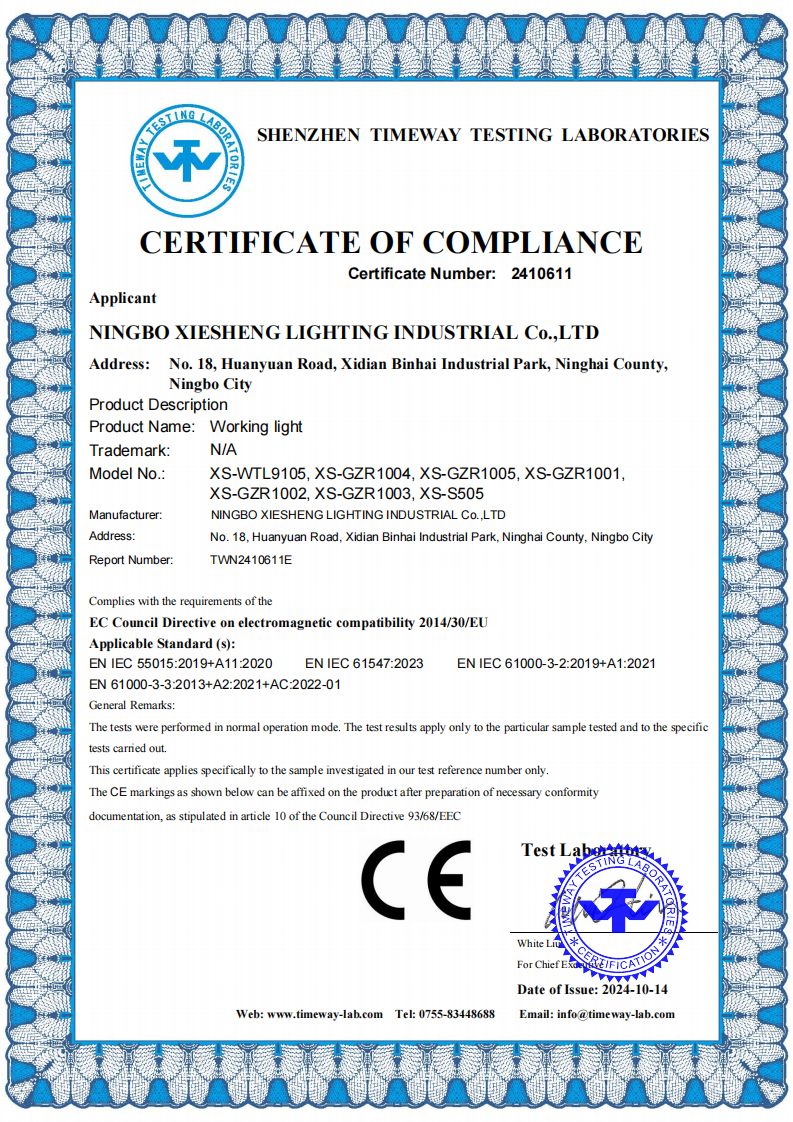
- Documentation Is the Foundation: Before any site visit, thoroughly review the factory's certifications (like ISO 9001), business licenses, and quality management system (QMS) documentation. This initial screening saves time and exposes early red flags.
- On-Site Inspection is Non-Negotiable: Visiting the factory is critical. Pay close attention to the production lines, warehouse conditions, machinery maintenance logs, and the overall working environment.
- The Three Pillars of QC: A robust quality control system relies on three stages: Incoming Quality Control (IQC) for raw materials, In-Process Quality Control (IPQC) during manufacturing, and Final Quality Control (FQC/OQC) before shipment. Deficiencies in any stage are a major concern.
- First Article Inspection is Crucial for OEM: For custom work light production, a meticulous First Article Inspection (FAI) is vital to ensure the initial products off the line match your exact specifications before mass production begins.
- Understand AQL: The Acceptable Quality Limit (AQL) is an industry-standard statistical tool used during pre-shipment inspections to determine if an entire batch of products meets your quality standards.
- Don't Ignore R&D: Evaluate the factory's Research & Development capabilities. A strong R&D team indicates the supplier is invested in innovation, problem-solving, and future-proofing their products.
- Define Non-Conformities: Clearly understand the difference between minor, major, and critical defects. A high number of major defects or any critical defects found during an audit should halt the order.
- An Audit is an Investment: A thorough factory audit is an investment that acts as an insurance policy, protecting you from costly quality issues, production delays, and potential damage to your brand's reputation.
How to Audit a Work Light Factory: A 10-Point Framework
A structured approach is the key to an effective factory audit. This framework breaks down the process into manageable steps, from initial document checks to the final on-site inspection, ensuring no critical area is overlooked.
1. Pre-Audit Preparation and Documentation Review
Before you even consider booking a flight, a thorough documentation review can reveal a great deal about a potential supplier. This initial screening is a cost-effective way to filter out unqualified factories. A professional and organized supplier will have these documents readily available.
Key documents to request and analyze include:
- Business License and Certifications: Verify the factory's legal status, operational scope, and ownership.
- Quality Management System (QMS) Certificates: An ISO 9001 certificate is the global standard for quality management systems, indicating that the factory has established procedures for quality and continuous improvement. [1, 2] However, don't just accept the certificate at face value; verify its authenticity and scope with the issuing body.
- Quality Manual and Procedure Documents: The quality manual outlines the factory's QMS, while procedure documents detail specific processes like handling non-conforming products, calibrating equipment, and managing suppliers.
- Supplier Management Records: How does the factory vet its own suppliers of raw materials and components (e.g., LED chips, drivers, housings)? A reliable factory will have a documented process for qualifying and auditing their suppliers.
- Previous Audit Reports: If available, reviewing reports from other third-party audits can provide unbiased insights into the factory's strengths and weaknesses.
A refusal to provide these documents, or providing expired or questionable certificates, is a significant red flag.
2. On-Site Inspection Areas and Critical Non-Conformities
Once the documentation checks out, an on-site visit is the next crucial step in the work light factory audit process. During the physical inspection, you should focus on several key areas. Pay attention to the overall organization, cleanliness, and safety of the facility.
Key Inspection Areas:
| Area | What to Look For |
|---|---|
| Raw Material Warehouse | Proper storage conditions (temperature, humidity), clear labeling, FIFO (First-In, First-Out) system, separate area for non-conforming materials. |
| Production Lines | Clear work instructions at each station, proper lighting, organized workflow, and access to necessary tools and equipment. |
| Finished Goods Warehouse | Protection from environmental damage, secure packaging, organized inventory system, and clear separation of inspected and uninspected goods. |
| Testing and Lab Area | Calibration records for all testing equipment, controlled environment, and qualified personnel performing tests. |
| Employee Facilities | Clean and safe working conditions, availability of safety equipment (e.g., anti-static wrist straps, safety glasses), and accessible emergency exits. |
Identifying Non-Conformities:
During an audit, issues are categorized by severity. A critical non-conformity is a major failure that could result in a hazardous or unsafe product, or a complete violation of legal regulations. [3, 4] Finding even one critical defect is often grounds to fail the audit.
- Critical Non-Conformity: Example: Lack of mandatory electrical safety testing (e.g., hi-pot testing) for finished products.
- Major Non-Conformity: Example: No calibration records for a critical piece of testing equipment, like an integrating sphere used for lumen measurement. This indicates a systemic failure in the quality process. [3]
- Minor Non-Conformity: Example: A single workstation with an outdated work instruction document. This is an isolated issue that can be easily corrected.
A high number of major non-conformities suggests the factory's QMS is not being effectively implemented, even if they have the certification.

Work Light Factory Audit: Documents, Lines, and Sample Checks
A deep dive into the factory’s operational heart—its production lines, quality management systems, and sample handling protocols—separates the truly capable manufacturers from the rest. This is where you verify if the promises made on paper are a reality on the factory floor.
3. Production Line, Machinery, and QMS Evaluation
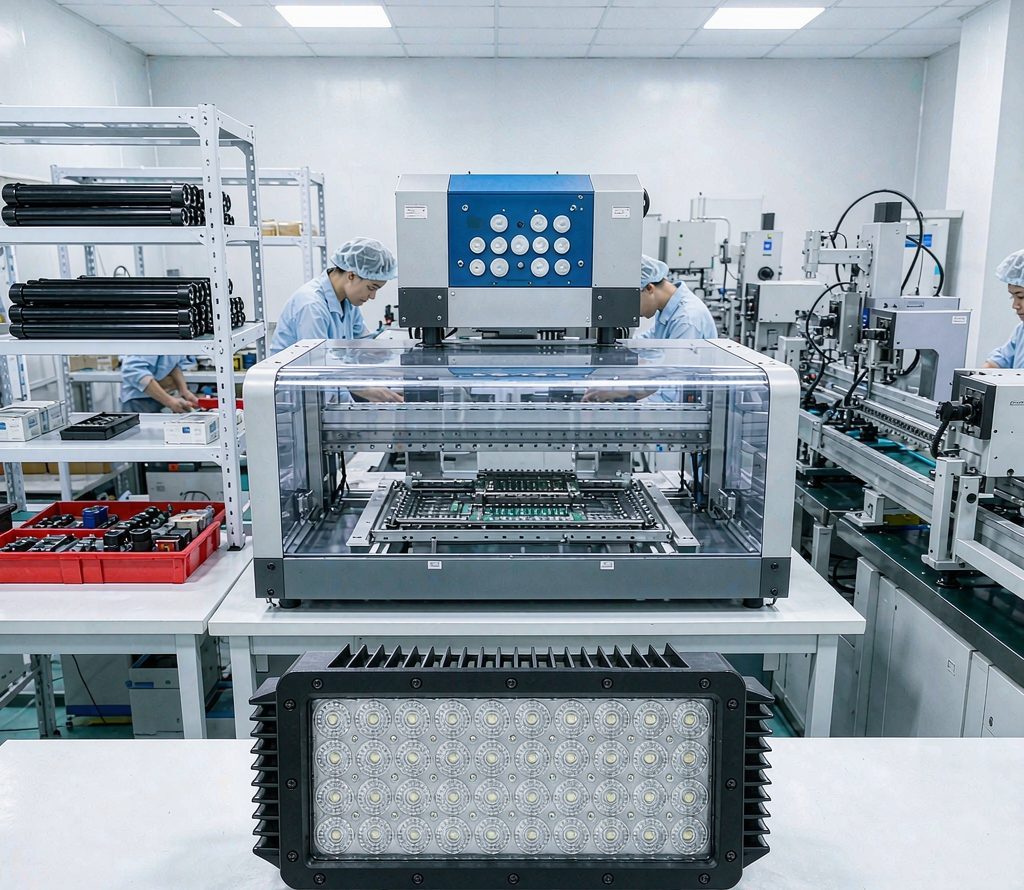
A factory's production capabilities are defined by its machinery, its processes, and the people who run them. During your on-site visit, evaluate the entire production flow from raw materials to finished goods.
Key Evaluation Points:
- Machinery Condition and Maintenance: Are the machines well-maintained? Ask to see maintenance logs and calibration records. Outdated or poorly maintained equipment is a primary source of product defects.
- Production Capacity vs. Claimed Capacity: Does the observable production rate match the capacity claimed by the sales team? Ask about their production planning system and how they manage order fluctuations to avoid compromising quality during peak periods.
- QMS in Action: The Quality Management System shouldn't just be a binder on a shelf. Look for evidence of its use on the factory floor. Are work instructions visible and being followed? Are quality checkpoints being documented? Does the staff understand their role in the quality process? A truly implemented QMS is a core component of a successful work light factory audit process.
4. Approved Samples and R&D Capabilities
Approved samples, often called "golden samples," serve as the benchmark for mass production. These samples should be signed, dated, and stored properly, with duplicates kept by both you and the factory.
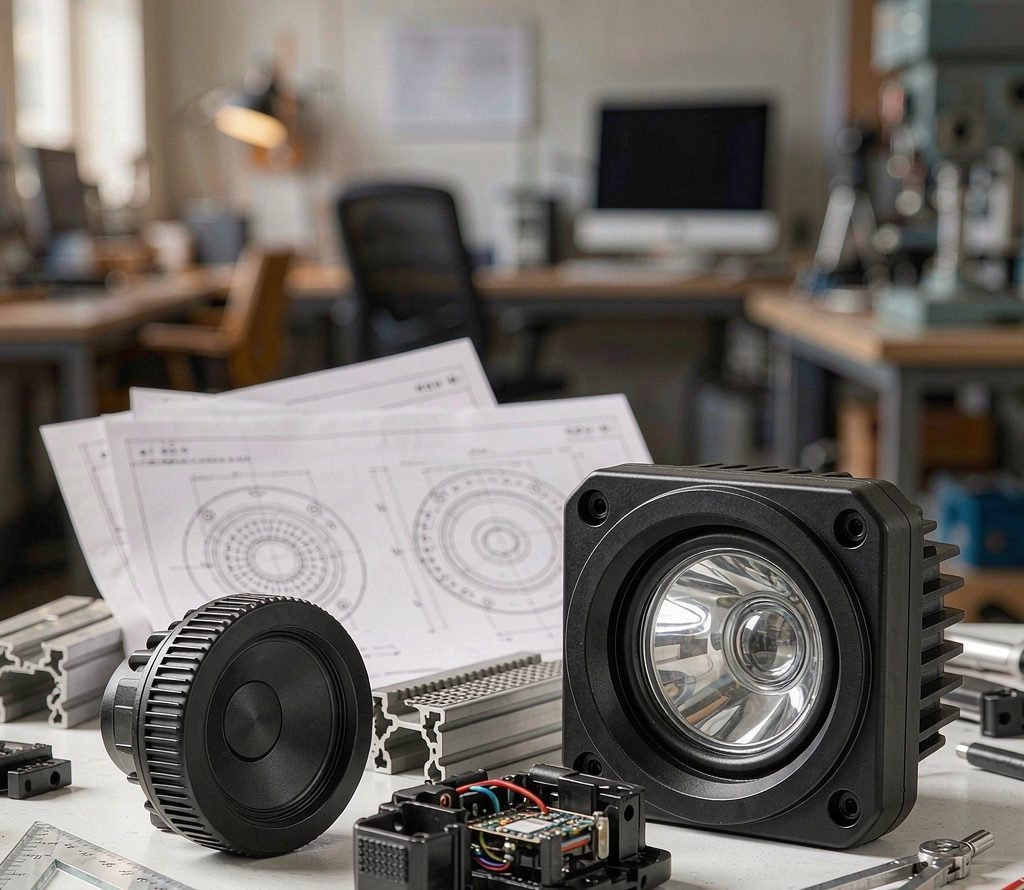
However, a factory's capabilities go beyond simply replicating a sample. Assessing their Research & Development (R&D) department provides insight into their ability to innovate, solve problems, and support custom work light production.
Evaluating R&D:
- Engineering Team: How many engineers are on staff? What are their qualifications? A strong engineering team can provide valuable design feedback and troubleshoot issues effectively.
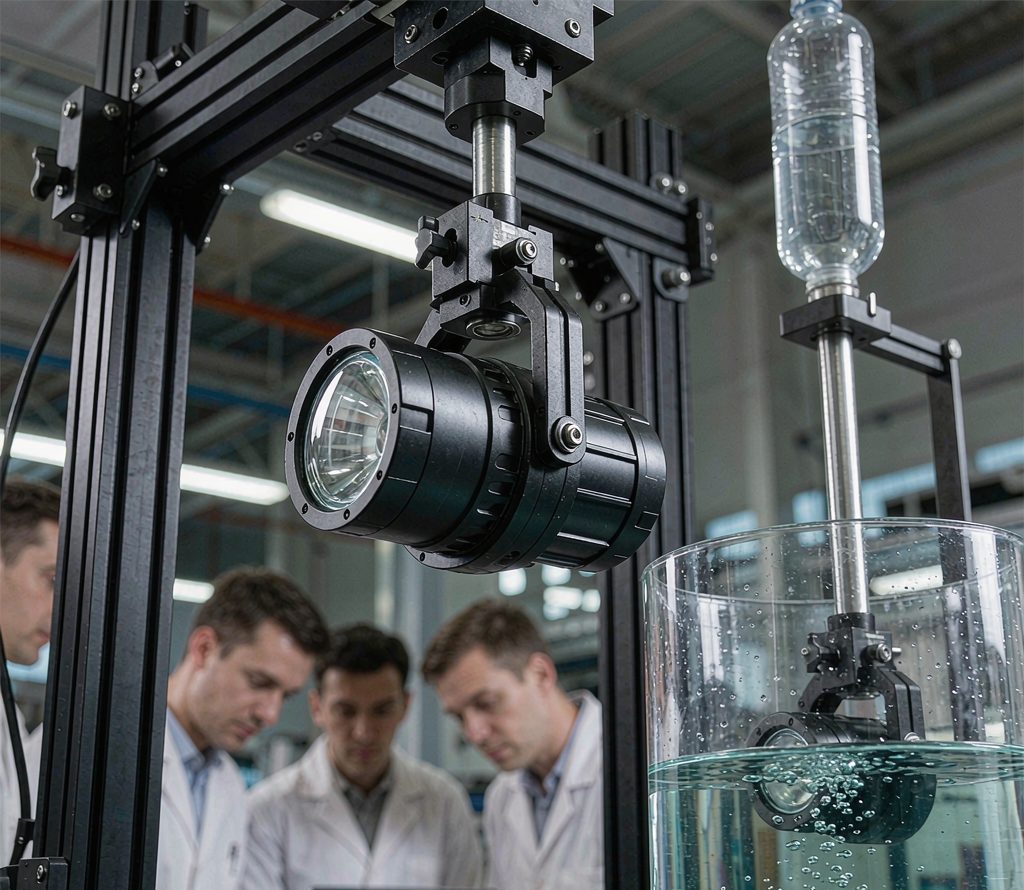
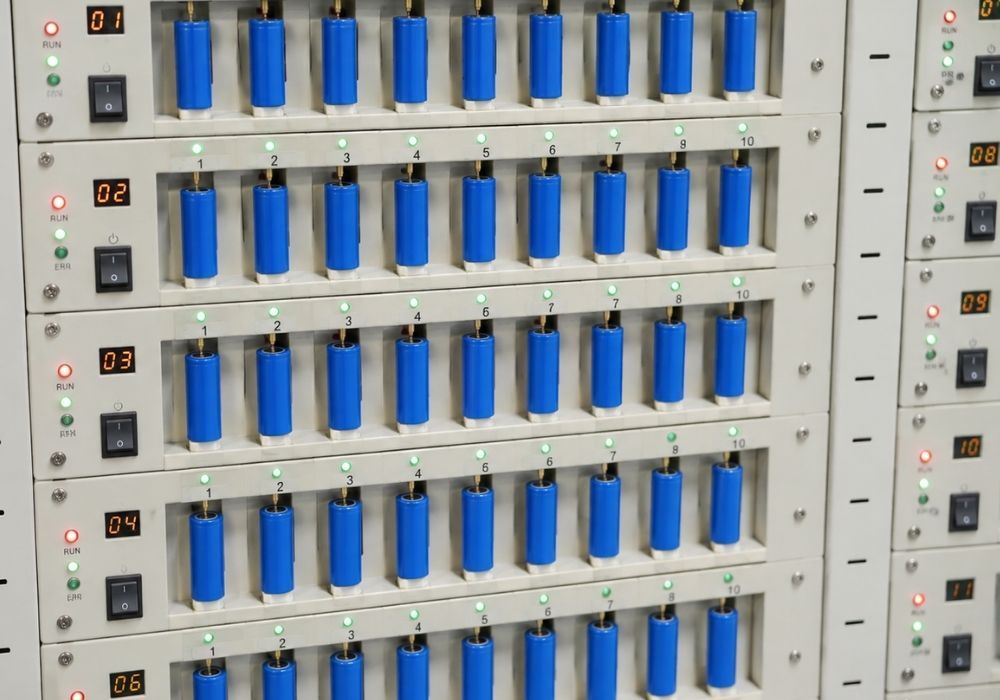
- Testing Equipment: A well-equipped internal lab (e.g., with an integrating sphere, goniophotometer, environmental chambers) demonstrates a commitment to quality and innovation.
- New Product Development (NPD) Process: Ask them to walk you through their NPD process. A mature process will include clear stages for design, prototyping, verification, and validation.
5. OEM Work Light Inspection: What to Verify on the First Article
For Original Equipment Manufacturer (OEM) or custom products, the First Article Inspection (FAI) is a critical quality gate. The FAI is a formal method of verifying that the first production run has produced parts that conform to all engineering and design specifications. [5, 6] This is your last chance to catch any discrepancies before thousands of units are made.
Your FAI checklist should verify:
- Dimensions and Tolerances: Use calipers and other measurement tools to confirm all physical dimensions match the technical drawings.
- Materials and Components: Ensure the correct materials and component part numbers (e.g., specific LED chips, drivers) have been used.
- Performance Metrics: Test the work light’s key performance indicators:
- Lumen Output and Efficacy: Does it meet the specified brightness?
- Color Temperature (CCT) and CRI: Is the light color accurate?
- Beam Angle: Does the light distribution match the design?
- Power Consumption: Is the wattage as specified?
- Labels and Markings: Check for correct logos, serial numbers, warning labels, and certification marks.
- Workmanship: Inspect for any cosmetic defects, assembly issues, or finishing flaws.
Any deviation found during the FAI must be formally documented and corrected before authorizing mass production.
Work Light QC Checklist: Incoming, In-Process, and Final Inspection
A robust quality control system is proactive, not reactive. It starts with inspecting raw materials and continues through every stage of production until the final product is packed. This multi-stage approach is essential for consistent quality and is a hallmark of a reliable manufacturer.
6. Three-Stage Quality Control: IQC, IPQC, and Final Product Checks
Effective quality control is built on three distinct stages: IQC, IPQC, and FQC. [7] A factory that only performs a final check is simply sorting good products from bad; a factory with a three-stage system is actively preventing defects from occurring.
- Incoming Quality Control (IQC): This is the first line of defense. IQC is responsible for inspecting and testing all incoming raw materials and components before they enter the production line. This can include verifying the specifications of LED chips, the durability of housings, and the functionality of power drivers. A strong IQC process prevents defective components from contaminating the entire production batch.
- In-Process Quality Control (IPQC): IPQC involves monitoring and testing at various stages during the manufacturing process. [8] This includes checks at assembly stations, after soldering, and during encapsulation. The goal of IPQC is to catch and fix problems as they happen, reducing rework and scrap. Look for documented checkpoints and operators actively performing quality checks as part of their workflow.
- Final Quality Control (FQC/OQC): This is the final inspection performed on 100% of finished goods or a statistical sample before they are packaged. FQC verifies that the work lights meet all performance, safety, and cosmetic standards. This is where comprehensive work light qc and inspection protocols are executed, including functional tests, hi-pot tests, and visual checks.
7. Common Work Light Defects and Inspection Protocols
Knowing what to look for is half the battle. When inspecting work lights, defects are typically categorized as cosmetic or functional. Your inspection protocol should cover both.
Common Defect Checklist:
| Defect Category | Examples | Inspection Protocol |
|---|---|---|
| Functional | - Light does not turn on - Flickering or unstable light - Incorrect CCT/CRI - Low lumen output - Failed IP (water/dust ingress) test |
100% functional test on all units (power on/off, mode switching). Performance testing (lumen, CCT) on a statistical sample using calibrated lab equipment. |
| Cosmetic | - Scratches, dents, or chips in the housing - Poor paint or coating finish - Misaligned lenses or reflectors - Glue residue or smudges - Incorrect or poorly printed labels |
Detailed visual inspection under good lighting conditions. Compare against the approved "golden sample." |
| Safety | - Exposed wires or poor soldering - Failed hi-pot (dielectric strength) test - Incorrect plug or cable type - Overheating during operation |
Visual inspection of all electrical connections. Mandatory hi-pot test. Thermal testing under load. |
This checklist is a starting point. A truly comprehensive Factory Audit Checklist for Supplier Quality Audits should be tailored to your specific product requirements.
8. Factory Audit Checklist for Supplier Quality Audits
To perform a systematic supplier quality audit, a detailed checklist is your most valuable tool. While the specific points may vary based on the product, a general factory audit checklist should cover the following core areas. This checklist serves as a summary and a practical guide when you are on-site.
Quality Management System (QMS)
- Is the ISO 9001 certificate valid and applicable?
- Are quality manuals and procedures well-documented and accessible?
- Is there a clear process for handling non-conforming products?
- Is there a system for corrective and preventive actions (CAPA)?
Manufacturing Process
- Are production lines clean, organized, and well-lit?
- Are work instructions (SOPs) present at each station and being followed?
- Is equipment properly maintained with visible calibration statuses?
Supplier & Material Control
- Is there a documented process for qualifying new suppliers?
- Are incoming materials inspected (IQC) according to clear standards?
- Are materials stored properly to prevent damage or degradation?
In-Process & Final QC
- Are there defined IPQC checkpoints?
- Are FQC inspections performed on 100% of products or using a recognized sampling plan (AQL)?
- Are testing instruments calibrated and records available?
R&D and Engineering
- Does the factory have a dedicated R&D/engineering team?
- What are their capabilities for new product design and prototyping?
- Is there a formal engineering change notification (ECN) process?
Social Responsibility & Safety
- Are working conditions safe (clear aisles, fire extinguishers, emergency exits)?
- Does the factory comply with local labor laws?
- While not a full social audit, obvious violations are a major red flag.
The goal of this comprehensive check is to build a complete picture of the supplier's capabilities and commitment to quality before you proceed with a pre shipment inspection.
9. Pre Shipment Inspection: AQL Levels and Test Reports
The Pre-Shipment Inspection (PSI) is the final quality check before your order leaves the factory. It is typically conducted when production is 100% complete and at least 80% of the goods are packed. Instead of checking every single unit, inspectors use a statistical sampling method defined by the Acceptable Quality Limit (AQL).
Understanding AQL:
AQL represents the worst tolerable quality level. [9] It's an agreement between you and the supplier on the number of defective units that would trigger a failure for the entire batch. The AQL standard (most commonly ANSI/ASQ Z1.4) uses tables to determine the sample size to be inspected and the maximum number of defects allowed. [10]
For example, using AQL 2.5 for major defects means you are willing to accept lots with an average of 2.5% or fewer major defects.
Key Elements of a PSI Report:
- Quantity Verification: Confirming the total number of units and cartons matches the order.
- AQL Inspection Results: Detailing the sample size drawn and the number of minor, major, and critical defects found.
- On-Site Tests: Documenting the results of functional tests, safety tests (hi-pot), and performance checks performed on the samples.
- Product Conformity: Verifying that the product conforms to the golden sample and all technical specifications.
- Packaging Inspection: Checking the quality of shipping cartons, inner boxes, labels, and packaging materials to ensure the goods will survive transit.
Never authorize shipment until you have reviewed and approved the PSI report. If the inspection fails, the factory is responsible for reworking or remaking the defective goods before a re-inspection.
Book a Factory Review with OWLAMP
While this guide provides a comprehensive framework, conducting a full-scale audit requires expertise, time, and resources. Partnering with a trusted manufacturer who embraces transparency can simplify this process immensely. At OWLAMP, we not only welcome but encourage factory reviews.
Comparing Audit Types: Coverage and Costs
Factory audits are not one-size-fits-all. They range from simple verifications to deep-dive, multi-day assessments. Understanding the differences helps you choose the right level of scrutiny for your needs.
| Audit Type | Coverage | Typical Cost (USD) | Best For |
|---|---|---|---|
| Simple Supplier Verification | Verifies legal documents, business licenses, and basic factory profile (e.g., location, size). Usually done remotely. | $100 - $300 | Initial screening of a large number of potential suppliers. |
| Standard Quality Audit | A one-day on-site audit covering QMS, production lines, and QC processes as outlined in this guide. | $500 - $1,200 | A serious evaluation of a shortlisted supplier before placing a first order. |
| Comprehensive Factory Audit | A multi-day (2-3 days) in-depth audit that includes a thorough review of R&D, social compliance, supply chain management, and detailed process audits. | $1,500 - $3,000+ | High-value orders, long-term partnerships, or for brands with strict compliance and CSR requirements. |
| Social Compliance Audit | Focuses specifically on labor laws, worker safety, and environmental impact (e.g., SA8000, BSCI standards). | $700 - $1,500 | Brands with strong ethical sourcing policies and a need to protect their reputation. |
Conducting an audit a work light factory is a critical step, and at OWLAMP, our advanced automated manufacturing and transparent processes are open for your review.
Frequently Asked Questions About Factory Audits
1. How long does a typical work light factory audit take? A standard quality audit usually takes one full day on-site. A more comprehensive audit, including social compliance or deep process analysis, can take two to three days.
2. Who should perform the factory audit? You have several options:
- Yourself/Your Team: Best if you have team members with experience in quality engineering and manufacturing.
- Third-Party Inspection Agency: Companies like SGS, QIMA, or Intertek offer professional auditing services. This provides an unbiased report but can be costly.
- The Manufacturer's QA Team: A trustworthy manufacturer like OWLAMP can provide access to their internal audit reports and quality data, demonstrating transparency.
3. What happens if a factory fails an audit? If a factory fails, you should not place an order. Instead, provide them with the audit report detailing the non-conformities. A good potential partner will create a Corrective Action Plan (CAPA) to fix the issues. You can then decide whether to conduct a follow-up audit to verify the improvements.
4. Is a factory audit necessary for every order? A full audit is crucial before engaging a new supplier. For repeat orders with a trusted supplier, you may rely on batch-specific Pre-Shipment Inspections (PSIs) and periodic (e.g., annual) re-audits to ensure standards are being maintained.
5. Can an audit guarantee a perfect work light product range? No audit can guarantee 100% perfection across an entire work light product range. However, a thorough audit significantly minimizes the risk of systemic quality failures, production delays, and safety issues. It ensures the factory has the systems, processes, and capabilities in place to produce high-quality products consistently.
To ensure the highest quality for your work light procurement, consider booking a professional factory audit or requesting a detailed audit checklist directly from our quality assurance page. Investing in a thorough factory audit serves as an essential insurance policy, safeguarding against costly quality issues, production delays, and reputational damage. It is the cornerstone of building a reliable and successful supply chain.